Showing posts with label poetry readings. Show all posts

Saturday, December 29, 2007

The Great Chicago MLA Poetry Marathon of 2007

So, this happened Friday:


There it is: the great Chicago Poetry Marathon of '07, held during the Modern Language Association's annual calling together of the professorial tribes. During one of my darker moments in the process of organizing this shindig, I'd written to John Matthias, saying "the whole thing will be demeaning to all concened, I'm sure. I plan to fake a stroke in the first five minutes and be carried out by my minions so as to avoid the inevitable disaster." But my melodramatic acting chops were never called for: everything went off without a hitch. No bar mitzvah or charity fundraiser was in progress when we arrived; the booksellers didn't fall into turf wars at the tables, the caterers didn't drop an urn of steaming decaf onto the PA system, and despite Ray Bianchi and Garin Cycholl's threats, the Chicago poetry mafia decided not to deliver any kind of beat-down to the peace-loving Bay Area types. The guys who arrived with video cameras weren't a poetry-suspicious crew from Homeland Security monitoring us for future deportation to Gitmo, but archivists recording it all for the Chicago Public Libraries. Or so they said. And despite the snow, the crowd turned out in force. From my perch in one of the balconies (where I felt like Evita Peron) I estimated somewhere between two and three hundred people were there, which is, I think, a record. The readers showed up in force too, although Orlando Ricardo Menes was a no-show and Petra Kuppers was delayed (though she's since sent me a link to a video-version of the piece she was going to perform).

Some highlights for me included:

  • Joe Amato and Kass Fleisher delivering pieces written specifically for poetry readings like this. Joe's piece, a stuttering-sort of poem that worked the phrase "this next one is about..." around in different word-jazzy improvisations was a great way to begin the reading; while Kass' piece about the importance of content in writing, with its aggressive bit about "what do they want to reform anyway, except syntax?" drew roars of approval and disapproval in equal proportion.

  • Pierre Joris reading "This Afternoon Dante Will Be Expelled," a poem we published in Samizdat's Rothenberg-Joris issue a few years back. I meant to say tell him how happy this made me, but at exactly the moment he came near me through the crowd I (cold-ridden as I am) was trying too hard not to sneeze.

  • Barret Watten reading a piece written-through William Carlos Williams' poetry, which I'd heard some of a year ago in Tulsa. Can't wait to see this in book form.

  • Don Share reading a poem about his child as a "dependent now sitting in the chair where ambition once sat" (I'm paraphrasing). I saw looks of deep recognition on the faces of my colleagues Davis Schneiderman (a new parent) and Josh Corey (a parent soon-to-be).


  • Philip Metres not reading, exactly, but holding up a series of signs while music played -- surely a shout-out to Bob Dylan's "Subterranean Homesick Blues".

  • Simone Muench beginning her poem about horror movies with the line "Dear Leatherface..." (Simone really understands all this horror movie stuff, and I'm convinced it plays into the big theme of her latest book Orange Girl, which I really should review or blog about soon, given that I've taken probably 2,000 words worth of notes on its narrow margins).

  • Tim Yu, the final reader, letting me and Patrick Durgin have it for organizing the reading along alphabetical lines.

    When it was all over and time to clear out, I finally got to fulfill a fantasy I've had since I first saw The Blues Brothers back in the eighties: I was able to stand in front of a group of people and shout "you don't have to go home, but you can't stay here."

    UPDATE: Philip Metres now has a post up with notes on each of the readers. Ahoy!

  • Friday, October 05, 2007

    Morning Poets


    This morning I gave a poetry reading at the University of Illinois — Chicago, one I didn't advertise with my usual shamelessness because it was limited to students. I'm glad to have done it: some of them had clearly read my poems, and I saw copies of The City Visible in the room. But there's something odd about giving a poetry reading at nine a.m. I mean, a poetry reading just seems like one of those things it's faintly indecent to do in the morning, like eating buffalo wings or reading Georges Bataille. And don't even think about eating buffalo wings while reading Georges Bataille, unless you're deep into a Friday night and no one's looking. Even then, you've probably got some explaining to do.

    And so this brings me to the vital question: who are the morning poets, and who are the late-night poets? Just about anyone eighteenth century works well in the morning. (There are exceptions, you say? Preposterous!) Alexander Pope's Essay on Man is probably the best rise-and-shiner of the lot, beginning as it does with a kind of clarion call, a relentlessly wholesome countryside, and the prospect of an active-yet-playful exploration:

    Awake, my St. John! leave all meaner things
    To low ambition and the pride of Kings.
    Let us, since life can little more supply
    Than just to look about us and to die,
    Expatiate free o'er all this scene of man;
    A mighty maze! but not without a plan;
    A wild, where weeds and flowers promiscuous shoot,
    Or garden, tempting with forbidden fruit.
    Together let us beat this ample field,
    Try what the open, what the covert yield;
    The latent tracts, the giddy heights, explore
    Of all who blindly creep or sightless soar;
    Eye Nature's walks, shoot folly as it flies,
    And catch the manners living as they rise,
    Laugh where we must, be candid where we can,
    But vindicate the ways of God to man.


    The "St. John" (pronounced "Sinjin," like the character from Jane Eyre) is Henry St. John, Lord Bolingbroke, so we've got to feel good and chuffed from being put in such a lordly subject-position. And all that fresh air wafting in from line six on will blast the cowbwebs out of the most hung-over of heads. (The eighteenth c. knew about hangovers, too: with most water too questionable to drink, they downed booze in quantities that would make Dylan Thomas blush). And then there's God, at the end of the stanza: as the rest of the poem makes clear, this is a deist-y sort of God, a good rational clockmaker, the sort of deity you'd want to meet in the morning, not one of those Dostoevsky-and-Carravagio Gods, with the sublime bolt of sudden light that catches you when you're lying in the midnight gutter. Pope's God is more of a reasonable-explanation-for-it-all than a shout in the street. So reading Pope, you just about feel you can face the day on your own two feet.

    Your great late-night poets are, of course, your nineteenth century types: Baudelaire, Rimbaud, Coleridge. If we lived in a nation with (ahem) Sound Literary Policy, there'd probably be a moment when the evening news with Anselm Hollo would be interrupted by a special bulletin announcing that it was now a felony to read any poem published between 1789 and 1914 until after dark. Poe would of course be banned entirely, unless one obtained a special permit to read him in a freezing garret with a half-finished bottle of absinthe and floorboards that creak enough to scare the bejezus out of you.

    But what about what the poetry of the period volume 8-E of the Norton Anthology of English Literature assures me is called "The Twentieth Century and Beyond"? (I always hear that title in the voice of Buzz Lightyear). Morning, noon, or nighttime poetry? What's that? What? You find my paradigm simplistic and arbitrary? As bad as the whole experimental/mainstream thing of the 1990s? You wound me, sir! Wound me! I'm off to sulk over Bataille and chicken wings.

    Saturday, January 20, 2007

    What Went Down at Powell's North, or: Notes on Poetry Readings That Do Not Disappoint


    Last summer I posted a longish entry about poetry readings, the gist of which was "I, too, dislike them," at least much of the time. I got a lot of email after that, mostly from people who wanted to sympathize. I also heard from a number of people who wanted to talk about ways poetry readings could be improved. I don't think there's a single silver bullet that will put to rest all of the problems that bedevil poetry readings, but this week's reading by Zach Barocas at Powell's North in Chicago had me thinking about a few things that could help more poetry readings go well.

    At least one of the elements that contributed to Zach's success isn't really tranferable: charisma. People like Zach, and he's confident and easygoing enough to pull off that delicate balancing act of simultaneously putting people at ease while impressing them. But not all of us are going to be former rock stars, (do drummers like Zach count as rock stars? Joe Doerr, another poet who toured internationally as a rocker, used to refer to drummers as "not musicians, exactly, but people who hang out with musicians...") (attention drum geeks: please direct your wrath at Joe, not me -- unless you happen to be Charlie Watts, in which case send your angry email to me and I'll have it framed, or maybe even cast in bronze).

    Two other things about the reading at Powell's seem like good ideas that can be emulated elsewhere.

    The first of these is a performace feature that I've seen elsewhere from time to time, and always liked: the featured poet reading work by other poets. This seems to work best when the work of the other isn't just offered up on a silver tray as a gesture of affiliation with Great Culture. Rather, it works best when the poems have some real, direct relation to the work of the poet doing the reading. Zach read poems by two poets — Pam Rehm and Graham Foust — who clearly have meant a lot to him. You could hear, too, the dialogue between their work and his, and sense his admiration, even love, of their work. I think this last bit about palpable admiration is important, because it helps to cut through one of the most baleful elements of the poetry reading as a performance genre: the inherent skew toward apparent egoism. The solo performer, up there by himself, reading work he wrote by himself, is the bread-and-butter of poetry readings, and no matter how saintly and selfless the poet may be, there's a tendency, induced by the very nature of the event, for the poet to look like a bit of a self-regarding creature (given the fact that many of us are in fact self-regarding creatures, the potential for the poet to look like something of a jerk is a bit high) (I think back on the first readings I gave with something of a shudder, and with gratitude for not being roughed-up by the crowd afterwards). So this was a good thing, Zach reading a few carefully chosen pieces by poets who had clearly meant a lot to him, and letting us see how their work had played into his own poetry.

    The other good thing about the reading at Powell's was the inclusion of student readers (um... I mean "emerging writers") from nearby writing programs. Justin Palmer and Amira Hanafi, both writing students at th School of the Art Institute, served as opening acts, each reading a single piece (a shortish story in Justin's case, a long poem in Amira's). This was cool for a couple of reasons: firstly, it helpe to fight the Big Swaggering Ego bias built in to most poetry readings (regardless of the personality of the reader); and secondly, it helped create a different audience dynamic than is often the case.

    One of the things I grumbled about in my post on poetry readings last summer was the disconnect between audience expectations and the things poetry readings often provided. Among other things, I cited the campus poetry reading as probematic because of the prevalence, in the audience, of students who had been dragooned into going as a class requirement or for extra credit. I'm not actually against this, and it can end up being a positive experience for students in many ways. It can even be the genesis for a lifelong love of poetry. But there's no surer way to suck the life out of something than to make it an administered requirement of some kind.

    At Powell's there was a significant student element to the audience, but it wasn't a dragooned audience. It was, instead, a phenomenon I'd started noticing at many campus events (open mikes, choir concerts, etc.): students will turn up, of their own volition, to see their fellow students perform. So along with the usual Chicago poetry crowd (hey, O'Leary brothers -- good to see you there), and a music crowd from Zach's punk days, there was a whole crew present from the School of the Art Institute, many of whom, I think, wouldn't have made it to the reading if there hadn't been two students reading as well. In a way, the headliner-with-local-student-talent combo is symbiotic: Zach's presence lent prestige to Justin's and Amira's appearance, and put their work in front of an existing literary community; Justin and Amira brought in a crew who might not have made it otherwise. And it gets a student audience into an off-campus poetry reading, which helps further something that should be a part of any literary education: the cultivation of a sense that poetry isn't just something that comes on a syllabus.

    It's important that this wasn't just the usual group reading, like the marathon at the MLA this year, since events like that don't bring different communities together so much as they give a venue to an existing community (I'd actually like to see a group reading that brought very different poetic communities together: Marc Smith and Charles Bernstein and Robert Pinsky and Geoffrey Hill and Margaret Atwood and Jimmy Santiago Baca, say -- I'd dislike individual parts, but it would be a hell of an interesting evening).

    Powell's is sticking with this student-writer-as-opening-act format for at least this season. Next month one of Lake Forest's very own, Jessica Berger (on whose thesis committee I have proudly served) will open for a fiction reading by Steve Tomasula. If things go as well then as they did the other night, I think it will be safe to say that Powell's is on to something.

    ****

    Amira Hanafi is an interesting poet, by the way. Judging by what she read, she's very much into what Robert Kelly used to call the "poetics of information." She read a piece about genetically modified foods, with some nice, subtle loopings back and forth between textual moments, and a clever way of showing how we are what we eat, which makes most Americans corn syrup of one sort or another. This beats the hell out of another confessional poem, another late-langpo disjunction fest, or another ghastly hybrid of the two, a combination that is surely the genetically modified hydrogenated corn syrup of contemporary poetry.

    ****

    PS

    I've started using the "labels" function of this blog, which functions as a kind of an index. I'll be retrofitting old posts with labels slowly, though, so if the feature doesn't seem useful at the moment, give it some time. Sheesh, already, the impatience!

    Monday, August 14, 2006

    Poetry Readings: Ever Get the Feeling You've Been Cheated?


  • 1. In Which I Consider the Words of Johnny Rotten

    Would I sound too much like the kind of guy who spends several hours each week cross-indexing his mint-condition collection of punk, ska, and indie rock vinyl if I began a post by saying something like "The other day I was thinking about what is arguably the second-greatest public statement by a member of the Sex Pistols..." Probably. But at least I wasn't cross-indexing my vinyl when I thought about Johnny Rotten's famous quip from the stage of the last Sex Pistols concert: "Ever get the feeling you've been cheated?" The show at the Winterland in San Francisco had been a real train-wreck, and Rotten meant, in his own way, to sort of apologize to the crowd by laying down that question and walking out. No, I wasn't checking my reference files for some arcane detail about how to organize the "American Punk, 1975-1979" subsection by record producer (though far be it from me to sneer at such a nobly geeked-out project) when I thought of Rotten's question. Instead, I was looking at the lineup for this fall's On the Run Reading Series, which I co-ordinate with my colleague Davis Schneiderman.

    It isn't that I think Davis and I are working some poetic/academic version of the Great Rock and Roll Swindle (though I've always thought Davis has a little whiff of Malcom McLaren about him). No indeed. I mean, I think we've got a pretty sharp lineup, even a kind of edgy one for our leafy corner of the liberal arts. It's that I've never really been happy with the format for poetry readings, and have rarely met anyone who has been. And when I give them myself, I sometimes feel (I know, I know, delusions of grandeur) an emotion like Johnny Rotten's at the end of the Winterland concert. Looking out over the eager-to-split-and-get-a-drink crowd, I sometimes feel like saying "Ever get the feeling you've been cheated?"

  • 2. The Trouble With Poetry Readings

    And I'm not alone in feeling that most poetry readings can be kind of a drag. (A note to the inevitable reader who's going to send me blistering email saying, "My readings are different, because they're special and I really care about the audience experience": yeah, okay, you're different. And so's your favorite poet who gave that immortal reading in South Beach. You're both alright. You have beautiful souls and it shows, man). I mean, I hear polite complaints from all quarters: my pals in the freakstream of poetry as well as my acquaintances from what passes for the mainstream big-league of the art. Sometimes someone comes up with some ideas for how to reshape the format for poetry readings, too. Remember Dana Gioia's little checklist at the end of Can Poetry Matter?, where he suggested interspersing poetry with music, and having poets read famous poems by the late great versifiers? There may be something to this idea that the performances could be different. I mean, the most crowd-pleasing poets I've seen have been those who depart from the usual "I'm reading some poems from my book" format: at Lake Forest I recall Andrei Codrescu knocking 'em dead by sort of projecting persona for an hour, with the occasional poem thrown in, or Michael Donaghy impressing with virtuosity, reciting all of his poems from memory. So maybe there's something to be done with changing what we do at the lectern. Getting rid of the lectern might be a big part of it.

    But what if a big part of the problem with poetry readings isn't a matter of what's up on stage, but a matter of what's down in the seats? (And no, I'm not referring to the butt-punishing chairs devised by the enemies of aesthetic experience and fiendishly distributed to bookstores, universities, and art galleries worldwide). What if part of the problem is the audience -- or, rather, the expectations and goals of the audience? What if they come for motives that are bound to generate dissatisfaction?

    (Observe me duck beneath my desk, fearing a barrage of incoming hatred. Watch as I wait a moment, then sheepishly poke my head back up from behind desk and laptop, look cautiously around, and resume typing).

  • 3. Cautious Disclaimers: An Incomplete List

    First cautious disclaimer: No, I don't mean that poets inevitably put on a great show, and the philistines fail to appreciate it. Believe it or not, oh adoring multitudes, I myself have sucked tremendously at times (uh, sorry, crowd at The Hideout, for that one time. Those of you that know, know, and those of you who weren't there, well, count yourselves lucky). Oyez.

    Second cautious disclaimer: I am always grateful and happy when people come to my readings.

    Third cautious disclaimer: No, I don't think I've figured out how to do a better reading than you have.

    Fourth cautious disclaimer: No, I don't want to blame the audience, or not exactly. I want to say that, in many instances, there's a disconnect between what audiences come to readings for, and what readings actually provide. And I'm not sure that the readers can actually provide what the audiences are looking for.

  • 4. In Which are Disclosed the Several Varieties of Audiences for Poetry Readings

    So check this out. Years of lurking around colleges, bookstores, and various venues of an arty ilk have led me to categorize the varieties of poetry reading audiences into five main categories. (Audiences can be hybrid, but in their distilled form here are the basic types of audience, the constituent sources of any such hybrids):

    4.A. The Dragooned Student Audience. You know who these people are. You were one of these guys the first time you went to a reading. You may have press-ganged a few of these audiences together on your own, oh my colleagues. And what do such audiences want? Well, lots of things. Sometimes they really want to hear poetry. Some of the time, though, what some of the people want it is extrinsic to the whole "poetry, delivered orally" prescripton we've written out for them. Sometimes they want to know they'll pass the test, or get a chance to sign the sheet, or hook themselves up with the extra credit (not unreasonably, and not always -- but this is a function of the system we set up when we dragoon people into an event). So sometimes people come thinking of the reading as a chore, and end up enjoying the reading about as much as they'd enjoy an annual check-up at the dentist's office. I was one of these guys, even when I went to readings by poets I'd have enjoyed under other circumstances -- there's something about being told to do something that sucks all of the fun out of the event. (Even as I type this, I gird my loins for battle at my home institution, where some faculty are pressing for a system in which students are to be required to attend a certain number of intellectual events every semester. Every bone in my body cries out against such institutionalized infantalizing of the students...uh, except the one bone that's connected to the part of me that sometimes gives extra credit for hitting the reading...)

    4.B. Cultivated Professionals Lured By the Aura of Something Connected to the Poet or the Venue. This isn't so much a campus poetry audience as it is an uptown kind of crew. You find them at museum readings, or at other big city venues. They're generally affluent, skew middle-aged, and show up because of some mojo associated with the poet (he or she is the current laureate, say) or some mojo associated with the institution (to which they have probably written a check at some point) -- they're not there to see the poet so much as they're there to be a part of the 92nd Street Y or whatever similar institution graces their city. This may be one of the more satisfied kinds of audience, in part because advanced age has extended their attention spans and raised their thresholds for boredom, and in part because much of what they're after (the idea of participation in something respectable among the high-cultural-capital-and-high-economic-capital set) is on offer. But the poetry part can seem a bit extraneous to the real reasons for showing up, experienced the way one experiences a fund-drive on PBS, as a necessary and well-meaning interlude to be endured.

    4.C. Celebrants of their Own Ethnic, Sexual, or Regional Identity. Ever been to a Seamus Heaney reading at Notre Dame? What, no, really? Well, I'll tell you about it, man. There I was, at a Seamus Double Bill, Seamus Heaney and Seamus Deane. Along with the dragooned students (self included) and the cultivated professionals and the local poetry producers (more of which anon) was the Irish American community out in full erin-go-bragh force. I mean, they seemed to appreciate the reading, but part of me thinks that there were some who were disappointed that the two Seamuses didn't come out on stage wearing emerald suits and the kind of plastic kelley-green bowler hat one sees in Southie on St. Patrick's day. What was desired was a pure injection of eau d'Irelande, and it was inconveniently cut with a large dose of poetry. Nothing wrong with the readers or the audience, but each was about a very different thing.

    4.D. Production for Producers: The Poetry Crowd Consisting of Poets. This is more of a downtown groove, though you get it at big universities too, and during literary conferences. Sometimes these people are really into the poetry, just as some dragooned students are, and some members of other kinds of crowds. But if the hoots of laughter at not really very funny stage banter and the craning of necks to look around and see who is there looking at you are any indication, there are ulterior motives afoot too. Some people go to be seen as members of the community, or to network furiously, seeking the kinds of face-to-face interaction that may lead to publications or readings or jobs or the like (not that that's a always bad thing -- every profession this side of hermit has some need for this stuff, and poetry has become a kind of profession, which is a whole other topic, and one that causeth the good-hearted to wring their pallid romantic hands). Some come for the opportunity to socialize post-reading with likeminded people, who may be thin on the ground at bars other than the one next to the reading -- again, nothing wrong with this, but it doesn't have a lot to do with listening to poetry at the reading.

    4.E. The Slam Crowd. Like 4.D., above, but, you know... drunk.

    So there you have it, class: the five elemental types of audiences, which can of course be mixed into various compounds. Did I leave anyone out? Probably. Let me know. But I think there's enough coverage here for the general point to be made: most poets aren't selling, and can't reasonably be expected to want to sell, what most audiences came to buy. Dissatisfaction seems inherent in the system.

  • 5. The Big Solution

    Uh...well... check back with me later. I gotta go somewhere and, uh, do something...

    (Exit the blogger, pursued by his doubts and insufficiencies)


  • 6. Why We Go To Readings Despite The Misery of it All


    (Enter the blogger, accompanied by sentimental melodies from the string section. Emanating from his person is a Garrison-Keillor like folksy warmth redolent of hope and positivity etc.)

    On a good day, I can think about poetry readings the way Marianne Moore thought about poetry when she wrote:

    I, too, dislike it: there are things that are important beyond
    all this fiddle.
    Reading it, however, with a perfect contempt for it, one
    discovers in
    it after all, a place for the genuine.


    On other days, I think of readings not so much as things I like to attend, but as things that I'm glad to have attended. In this they're a lot like travel: I dig it ahead of time, when I'm pawing through the Rough Guide and thinking about how clever I'm going to be when I pack three jackets, four pairs of shoes, a gallon of hair-care product, and three volumes of Gibbon's Decline and Fall of the Roman Empire into my carry-on for that long-awaited week in beautiful Kraplachistan. And I enjoy travel post-facto, when I see that it actually has Enriched Life. It's just the middle bit that's problematic, consisting of aching feet, misread train schedules, getting lost on the local metro, trying to find someplace to sit that isn't covered in pigeon shit, sneering with contempt at my demographic doppelgangers, the other tourists from Chicago, or somehow managing to lose part of a Q-tip in my ear and, due to language barriers, being unable to explain the problem to the bemused locals.

    So anyway. What was my point? Oh yeah, check out this year's readings at Lake Forest. Eventually, you'll feel good about it.

  • Sunday, August 06, 2006

    Samizdat Blog: The Lost Sessions


    Okay, peeps, I've been furiously writing away on a number of projects all month long -- none of which, as the date of my last post makes clear, include any entries for this blog. No indeed. I have slaved over a piece on John Peck for the Chicago Review, I have labored over an essay on Peck, John Matthias and Allen Fisher for Pleiades, I have conducted a ruthless campaign to devise an article on James McMichael, Ken Fields, and Laton Carter for the Notre Dame Review, I have worked my mojo in my dojo to prepare for a talk at Northwestern on this very blog (ironically allowing the blog to lie fallow in the process), and I have devised various revisions and edits for an essay called "The Aesthetic Anxiety" (the gist of which is described by Dave Park over at his blog). But that's almost all behind me, so I turn to my much-battered Moleskine and have a look at the notes I took for the entries I'd planned to write this July. Here, in brief form, then, are The Entries I Never Wrote:

    1. Distubing Disinterest

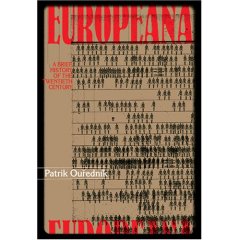
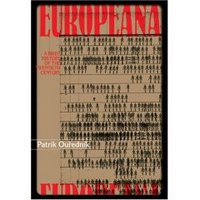
    So there I was, pawing through the back-pages of the Chicago Review, thinking about writing a blog entry on why I always turn to the back pages of any journal or magazine first (whatever ilk it may be: The Nation, The New Yorker or ACM, whathaveya) when I ran across Martin Riker's review of Patrick Ourednik's Europeana, which seems to be getting more play than most of the Dalkey Archive list. I've sort of had my say on Ourednik, but I was less interested in writing about Europeana than in writing about Riker's reaction to it, and the way that Riker's reaction struck a chord with some other critical reactions to a very different text. Riker (a sharp guy who came up to Lake Forest to give a good paper on David Antin for the &NOW Festival this spring) was put off by the deadpan tone of Ourednik's book: you just can't get a read on how Ourednik feels about the European history he describes. It's as if he's somehow turned off his ability to feel anything for his subject -- no positive or negative emotions, no cues on how we should assess the subject. This disinterested perspective is quite rare in art, and we tend to be bothered by it: we just don't know what to make of a purely disinterested take on things. A similar situation came about earlier this summer, when the movie The Notorious Bettie Page came out. I remember seeing it, and being struck by how the movie refuses to make moralizing statements about the two lives of Bettie Page -- first as fetish icon, then as Christian fundamentalist. The movie didn't do a typical Hollywood thing, giving us a frisson of the forbidden, then reassuring the squares by telling us that conventional morality is in the end best (CSI, anyone?). Neither did it take the kind of rebellious stance I'd kind of hoped it would take, championing the liberating forces of creative perversity against the repressive forces of uptight moralizing. It gave you Page's two sides and didn't choose between them (interestingly, it did explore the psychological similarities between freaky fetishistic power games and the power games of religious conversion -- the main difference between the two being that while the former knows it is a game, the latter thinks it is true and real). Anyway, the film's critics kept remarking on the odd way that it just didn't take sides or give you something to cheer for. No heroics in the conversion from perv to prude, and no fall from grace either. So I'd hoped to blog a little on our poorly developed ability to deal with disinterest. But sadly, it was not to be.
    2. What We Talked About at the Northwestern Summer Writers' Conference

    So there I was, on a panel down in Evanston with Claire Zulkey, Wendy McClure, and Kevin Guilfoile, talking about blogging. It was interesting to be there in that I got a sense of what people who write books of a kind very different from the kind I write (that is to say: books that large numbers of people read) talk about when they talk about blogs. What they want to talk about, it seems, is how to promote your book with a blog (which is possible though fraught with peril, I learned), or how to turn your blog into a book (which is hard to do, but possible). They're also interested in how to get people to read your blog (don't take month-long hiatuses) and in how many hits a blog gets (theirs get more than mine, though on a top day I get to about the level of a slowish day for some of them). My summer was bookended with two very different talks: a University of Chicago faculty and grad student seminar where the names dropped were those of philosophers, and a Northwestern writers' conference where the names dropped were those of literary agents. I'd planned to riff more on that cultural difference, and two different kinds of prestige, but sadly, it was not to be.

    3. Series A

    I made the scene down in Chicago at Bill Allegrezza's new poetry show, Series A at the very austere and Bauhausish Hyde Park Art Center, where Chris Glomski and Kerri Sonnenberg read for the inaugural session. What scene, you ask, and how exactly did you "make" it? Excellent questions! And I would have answered them, too, had I written a real blog entry (which was, sadly, not to be). That entry would have contrasted the reading with the two seminars I gave this summer. In the end, the scene at Series A was much more like the U of C seminar than the Northwesten Writers' Conference. It was clearly an instance of "production for producers" since most of the audience consisted or poets -- although the Chicago Review guys were there, sitting in their own row in the back, as were a few other non-poets. As with the U of C seminar, the social element was important -- much more gemeinschaft than gesselschaft: I think almost half of the people at the reading ended up drinking together at Jimmy's Woodlawn Tap afterwards, talking poetry and bullshitting merrily on into the night. So there was a tight-knit feel to it, very different from the "how do I broadcast to a wide audience" ethos of the Northwestern gig. Also of interest was a strange manifestation of blog pseudo-fame. I ran into Timothy Yu (whom I'd never met), who asked, when I was introduced, if I had a blog. I said that I did, and mentioned the name, at which point another guy I'd never met swivelled around and introduced himself as Sam Jones, one the the most dedicated poetry bloggers in our fair city. So there was a kind of secondary community, a blog scene laid out on top of the poetry scene. I'd have meditated on all this for you, folks, but was busy with other matters, so it was not to be.

    4. The Protestant Ethic and the Spirit of Poetry

    This is an entry I never wrote because it grew into a real article before it ever had a chance to be a blog entry. I'd been thinking about Max Weber, and how in his thinking the Protestant ethic of rigid self-control, asceticism, and denial leads (somewhat ironically) to Big Worldly Rewards. Then I thought of how the world of artistic production is always (in Bourdieu's phrase) "an economic world turned upside down." And it occurred to me that this was entirely true with regard to poetry that works the Protestant virtues: if you write a poetry that is emotionally restrained, you don't get such fame and worldly rewards as the poetry world offers, or at least you're not likely to. Lowell hit it big with Life Studies, folks, not Lord Weary's Castle. Anyway, this idea got kidnapped into a bigger project (look for it from my pals at the Notre Dame Review) and was sadly not to be in its blog form.

    5. Memories of the Aspidistra Bookshop

    I'd meant to rhapsodize about the much-missed Aspidistra Bookshop, a used book store and bohemian hangout that held down a slice of Clark Street real estate in Chicago for a few decades before closing. I'd worked there during grad school for a few years, my job usually consisting of coming in around 1:00 pm and being handed a wad of bills from the till by Ron Ellingson, the owner and a man of letters in his own pissed-off-Vietnam-vet way. He'd send me across the street to pick up a six pack of Guinness and two fried chickens, then I'd come back and distribute beer and chicken to Ron, his sons, his other employees (filmmakers, philosophy students, and others of our tribe), and the crowd of regulars (Startouch the astrologer, who had of an amazing afro, an amazing string of girlfriends, and a 900 number you could call for astrological advice infused with R & B music); Snowman the street musician/preacher/tuckpointing guy; Bungalow Bill the mysterious hustler; Ron's hippie lawyer Freeman; the awe-inspiring Fred Burkhart and a host of similar Saints of All-American Weirdness). We'd all watch the O.J. Simpson trial on a tiny black and white T.V. and wait for the inevitable moment when Ron would throw some hapless customer out of the store for saying something that fell beneath the standards of intellectual integrity, literary zeal, or boho cool. Anyway, I wanted to riff on the vibe of the place for a while, then ask why Aspidistra never acheived the status of such legendary bookstores as Cody's or George Whitman's Shakespeare and Company or even the old Peace Eye in the Village. My suspicion is that the second-city thing plays into it: Chicago's insufficient glamour strikes again. But I never got round to it, and sadly, I suspect the entry is not to be.

    So there they are, class: the lost sessions of Samizdat blog. Treasure them like the rare Factory Records EP they wish they were.

    Sunday, March 12, 2006

    Under the Pecan Trees and in the Academy

    Back from Austin, covered in glory. Or maybe that's barbecue sauce. Be that as it may, I bring you the following observations about the AWP fringes, along with an added bonus in the form of a note on the University of Chicago's recent conference on poetry criticism.

    1. There is no finer venue for a group poetry reading than the lawn behind the Bouldin Creek Coffeehouse on a warm spring evening.

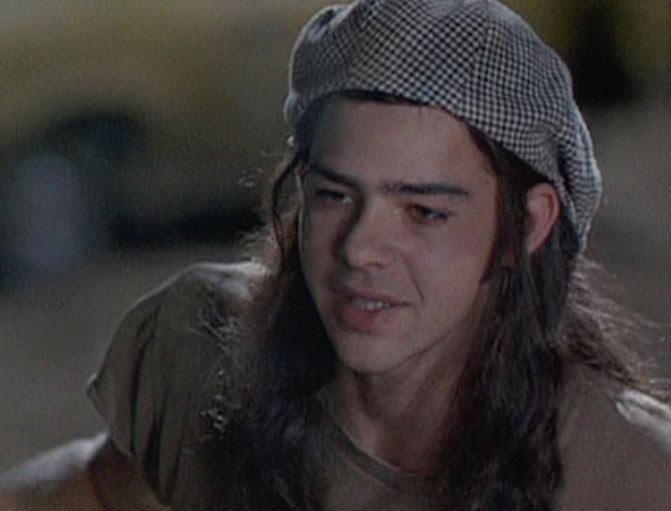
    You're guided in from the road by a fantastic neon sign featuring a reclining frog cradling a coffee cup and looking philosophically into the distance. You walk into the bar area, read the chalked-up specials, ponder for a moment whether to go with coffee or beer, then let your adoring fans put your drinks on their tab for the evening (thanks, Grant). The kid selling you your microbrew organic ale looks a lot like Rory Cochrane's character Slater in the Richard Linklater classic Dazed and Confused. You hang for a while with the poets and local scenesters, then head through a hang-out room, a big screened porch, and down a gentle slope. You stand outside at a microphone flanked by two Peavy amps and a 70s-era lamp, all beneath spreading limbs of a giant pecan tree. You turn to face the big crowd and feel like this is where you belong.

    2. The changing of the guard is always underway.

    The last time I was in the same room with Kass Fleisher, her husband Joe Amato, Maxine Chernoff and her husband Paul Hoover was in 1999, at a bar called the Cirque Divers in Liege, Belgium. We'd all been speaking at a literary conference for which Rosmarie and Keith Waldrop had been the eminences gris. At the Austin reading, though, it was Paul and Maxine who were the presiding literary couple, the locus of all gravitas. They sat together in the front row, Paul looking tall and distinguished in the American poet's black uniform, Maxine sitting sideways on her chair and emitting a sort of aura of kind benevolence. All the time I couldn't help thinking that, in an unspecified but no doubt shockingly brief-seeming span of years, I'll probably be at another such poet's hang (what's the progression after Belgian bar -- Austin coffeehouse? Nepalese used book store?), and see that Joe and Kass have become the iconic literary couple, presiding over the poets at play. Not a bad fate, really.

    3. Brett Eugene Ralph is the real deal.

    When I first saw Brett Ralph walk up to the mike in his trucker hat, biker boots, and general biker/redneck mien, I suspected he was going to be a mere garden variety prof-poet masquerading in a kind of western Kentucky drag as a way of distinguishing himself from the rest of us. But no! He's the real deal: former punk-zine editor, current poet and member of the band Rising Shotgun (which, mentioned as it is on my old pal Doug Shawhan's crackrabbit.com, must be good), and poet of the western Kentucky punk rock experience. "The Donkey," he said between poems, "always reminds me of punk. It's a docile, gentle, kindly creature, but when it opens its mouth it's just fuckin' awful..."

    4. The Chicago poetry mafia is everywhere

    Bill Allegreza, Ray Bianchi and Simone Muench were the venerable outfit's ambassadors to the reading.

    5. L'affair Fence lives on.

    I've admired Joanna Fuhrman's poems for a while, so I was glad to have a chance to talk to her after the reading, when she joined me and a few others over some of Bouldin Creek's finest tofu tacos. Fence came up, since they'd hosted a reading of their own across town. It turns out the Quinne cover still incites heated argument, in this case between an anti-Quinne faction (Joanna) and a pro-Quinne faction (me). Joanna didn't like that the image of Quinne wasn't in any meaningful way an attempt to ironize or deconstruct the kind of image of conventionally attractive women we see on so many glossy magazines. I maintained that the use of exactly this kind of undeconstructed image on a poetry magazine was a kind of shaking up of norms, precisely because we'd expect poetry magazines to have covers that are either A) blandly arty or B) deconstructive. Somewhat hyperbolically, I claimed that the publication of that cover was a kind of minor-league version of Duchamp submitting a urinal to an art exhibit that claimed it was open to anything: it exposed the limits of our alleged tolerance. Joanna and I clashed even more when she claimed the things Rebecca Wolff wrote about the cover were even more offensive than the cover itself. Joanna didn't like the idea of a poetry magazine as a commodity. I (as a guy who ran an independent magazine for a few years) maintained that magazines are all the things we want them to be (the public sphere, the area of aesthetic free play, etc.) and market commodities at the same time. (I shouldn't be surprised that this bothered Joanna: I once wrote a bit about how this idea was scandalous to our received opinions). All of this raises the question: what other poetry journal cover last year was interesting enough to cause an argument about aesthetics, the marketplace, gender and objectification?Anyway. Joanna handled my response to her attack on the paintings of John Currin as unironic objectifications of women ("that is such bullshit") with a whole lot more grace than it deserved. And I still like her poems.

    6. AWP contagion, and the heroic defense against it

    I think I'm going to invent a new award (call it The Schmoozie) for the most offensive example of literary networking and self-promotion at or near the AWP Convention. Like many people at the reading, I avoided the real convention this year, but the AWP ethos came after us, in the person of a certain fiction writer, whose full name will be disclosed only to those approaching me in person and buying the next round. This fellow spent the reading jumping up and down out of his chair to introduce himself to people. I first noticed him when a hand thrust itself between me and Joe Amato, and a voice barked "Joe? John -- loved your book." At the end of the evening he invited himself on-stage as a reader, compelling the MC to summon the dispersing crowd back to their chairs.

    But my other new award, the Medal of Meritorious Merit in the Face of Overwhelming Clouds of Self-Congratulation (anyone got a better name?) goes to Kass Fleisher, for her statement earlier in the day to the assembled heads of MFA programs. She told them she thought the AWP was too anti-intellectual, and withstood many minutes of heavy shelling afterwards. Represent, Kass!


    ADDED BONUS: A BRIEF REPORT ON "HOW TO READ, WHAT TO DO: THE FUTURE OF POETRY CRITICISM"


    Before heading down to Austin, I trekked down to Hyde Park for a few hours of a small conference on the future of poetry criticism. After munching on the entirely convincing falafel (which seems to have replaced the cracker with awful cheese as the conference food of choice), I settled down for a panel featuring Jeff Dolven's “Communities of Style,” Oren Izenberg's “We Are Reading: Collective Intentions Toward Poetry,” and Maureen McLane's “Romanticism, or, Now: Learning to Read in Postmodern.” The format of the conference is a good one, worth emulating elsewhere: papers were made available ahead of time online, so the presenters didn't have to read from them. Rather, each speaker would rise in turn to summarize another speaker's paper and pose some questions about it. This made for lively discussion among panelists and audience members. (Izenberg seems to have honed the business of dealing with slightly nutty questions into an art. "I'm afraid I don't see the force of the question" is a phrase worth remembering).

    Dolven's paper was of particular interest to me, in that it addressed the question of a poet's signature style. Dolven's interested in careful stylistic analysis, but he's more interested in the immediacy with which we are struck by a poet's style. When we read we experience a moment of recognition, not a slow accumulation of facts, and this is his object of study. McClane's paper (which I didn't get a chance to read beforehand) seemed to be a riotous thing, more dialogue or closet drama than essay. Izenberg, who's written about literary community before, riffed on John Searle's idea of intention in an examination of how reading is changed if we think of ourselves as reading in common with others (who may or may not actually exist as readers of commonly-read texts). This paper had particular resonance, as I sensed that these three were friends, and that they must have been reading together, one way or another, for some time. (McLane teaches at Harvard, where Izenberg used to teach, and Dolven, who alluded to how he used to hang out with McLane, used to teach nearby, at Brandeis). In a way I think this panel must be the gessellschaft ghost of an old gemeinschaft practice of reading in common.

    I'd planned for my own upcoming talk at the University of Chicago to be a version of one of the chapters of Laureates and Heretics, in part as a shout-out to the editors of the Chicago Review, who were kind enough to publish part of the manuscript. But now I'm thinking of working up something else, a kind of response to McLane, Dolchen, and Izenberg. Theirs is too good a conversation to ignore.