Showing posts with label reviews. Show all posts

Sunday, August 27, 2006

The Earthward Pointing Thumb, Redux


From the deep, muggy swamps of Florida, from beneath the very shadow of Katherine Harris, and from the lingering pile of hanging chads and butterfly ballots, Mark Scroggins heroically blogs away about negative poetry reviews, among sundry other topics. Specifically, he notes my comment about the scarcity of negative reviews, a state clearly out of whack with the state of the art (we don't live in Lake Wobegon, so not all the books are above average). He notes my earlier comments on these things, but then rightly wonders if I'm not missing the elephant in the room:

I wonder if Bob ain't skirting the more proximate reason why there aren't more bad reviews of new books of poetry in the circles in which we travel: ie, because it's after all a pretty small world, the world of contemporary poetry that one cares about or theoretically ought to care about, & one's always chary of treading the toes of someone who might be willing to publish or review one's own work the next time around.


Too right! This is one more way that poetry reviewing is different from movie reviewing. I mean, Beyond the Valley of the Dolls aside, Roger Ebert doesn't harbor any ambitions to make another movie, so he doesn't worry about ticking off Clint Eastwood or Bruce Willis when he pans a movie. Not so in the deminmonde of poetry! Not in this our shadowy world of petty ambitions and resentments, where every reviewer has a manuscript of poems just waiting to be put into PDF format and sent off to press; where every journal editor has a similar manuscript; where half the publishers are in the same boat; and where the prize-givers are looking out for their pals. Ay yi yi. Someday American poetry's own low-rent version of L'Affair Jack Abramoff will come to light, I'm sure.

I mean, check out the gymnastics poor Mark Halliday has to go through in Pleiades when he wants to make some constructive criticisms of Helen Vendler's latest effusion of poetry criticism. Before he gets to his criticisms, he lists five reasons to praise Vendler, and then gets to that ever-present fear of those who write about big-wheels like Vendler: that the criticized bigwig will come down on the hapless reviewer hard, with the full weight of some kind of coked-up bionic sasquatch:

There is also a shady sixth reason to praise Vendler's book: she wields power in the contemporary poetry world; I might benefit from her goodwill, or suffer from her ill will! But of course it would be disrespectful both to myself and to Vendler if I were to let this worry skew my review.


Oh, Mark -- too late! I image you'll soon find yourself reduced to self-publishing on scraps of birch bark! And all that, just to say the truth: that the poetry world is too small and too incestuous for any kind of bad review to be safe. Except, of course, for the negative review of a book from The Other Tribe. You're safe if you've identified with one tribe of baboons and want to hurl feces at baboons from the neighboring tribe. (Was that my worst figure of speech yet? Surely I have sunk even lower...) I mean, you can sneer at the langpo guys if you're one of the new formalists, or dismiss as the product of the "School of Quietude" anything you don't like if you've signed up as one of Silliman's Mouseketeers (uh, I mean "as a practitioner of the Post-Avant"). So when we do get bad reviews, they're often more a matter of mutual antagonism than of careful and considered judgment.

What gets missed in all of the mutual back-scratching and inter-tribal chest-thumping is something we might call the "thumbs down because we care" review. Scroggins bemoans this situation, crying out from the kudzu-covered poetry yurt in his backyard:

I'm all for those careful, descriptive reviews of projects that one's largely sympathetic with; I'd like to see more critical, even cutting evaluations of worthwhile projects that one wishes succeeded but don't.
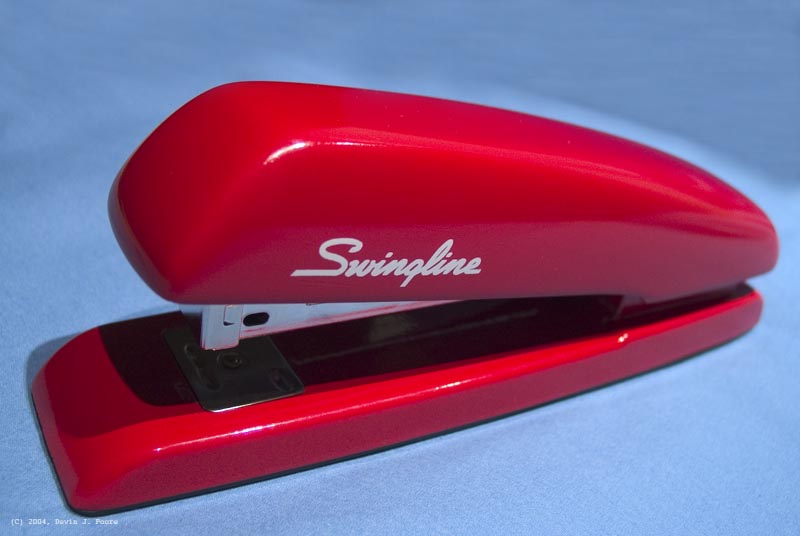

Oh, indeed. This is what we need. But the forces that condition our behavior mitigate against this sort of thing developing. That the material and social rewards for poetry remain pathetically low-stakes does little to change the situation. I suppose that's unsurprising to anyone who saw the fight over the preferable stapler in the movie Office Space, though. My guess is that the only solution to the problem is to not care about receiving the little rewards and perks of poetry, to let come what will, but not to jockey around trying to get an allegedly more prestigious job or a place in posterity. Easier to say than to do, but important, really.

**

In other news, Simon DeDeo has relocated to our fair city of Chicago. Already the weight of the hidebound eastern hierarchy falls away from his weary shoulders! Already he breathes the free midwestern air! Lo! See! Yea, he starteth a new journal.

Tuesday, August 22, 2006

On the Sign of the Earthward Pointing Thumb


This just in from Jeffrey Bershaw, whose sentiments echo those in a number of messages I received about "The Worst Living Irish Writer"/"The Decay of Twilight"/"The Decadent of Moyvane":

Mr. Archambeaux,

Oh, oh! Your review made me laugh and then a sentence or two later, I'd laughed again. After reading scathing reviews, however, I often wonder why people write them. Why spend the energy to write about something one doesn't enjoy? Unless, of course, one enjoys writing scathing reviews.

Thanks, anyway, though. Fun read. I like your writing. One day, I'll check out your poetry. When I do, I wonder if I'll like it, too.

Best regards,

Jeffrey B.


And voila, my attempt at a response:

Hey There, Bershaw

Great question! About writing negative reviews, that is. I mean, a lot of people think it is mean-spirited to say something bad about a book of poetry, although curiously enough people don't seem to mind it when a movie gets ripped by a critic. I suppose some of the logic of this apparent contradiction goes like this:

A movie reviewer is payed to give advice to potential consumers, so his loyalty is to the viewer, and he should only be nice to the film,and by extention the film-maker, when the film deserves it. But a poetry critic isn't getting paid, or if he is, it isn't much (true! I tend to get crappy token payments for some of my reviews, like maybe 50 bucks, and most I do for free) (*A parenthetical note to editors: Thanks for the fiddy! Really! I'll take what I can get...). Moreover, there's hardly any audience for poetry, and if you're in an actual bookstore you can sneak a peek into the book and decide for yourself. Consumer advice hardly enters into the matter. So why say something negative about a book of poems, if it isn't to serve the reader (much) or make (much) money?

Good questions! In my own case, I'll say this: most of the time when I'm asked to review books, and all of the time when I go to an editor suggesting a review of my own volition, I review books that I find interesting. But I suppose it is important to note that what I find interesting can be different from what I love. Usually I do love (okay, usually I like) the book in question. But when the Keltoi people sent me Fitzmaurice's book and asked me to review it, things were different. I thought it was lousy poetry, but the particular way it was lousy was interesting to me.

Here's how -- I teach Irish lit sometimes, and read a lot of it, and know some writers over there, etc., and one of the things I'd been interested in was the development of a kind of postcolonial nationalist poetry tradition in Ireland. It's all a bit more complicated than that, but you get the idea. You can see it grow and change over the course of the period of Irish lit I teach: roughly: 1880-now. And you can see it become less well adapted to the local conditions: what ws once liberating becomes confining (again, there are all kinds of variations and contradictions involved, but let this serve for shorthand). You can even see new traditions being born. In my review of Fitzmaurice's book I even named a few people whom I see, in my deeply-flawed crystal ball, as inventing a new Irish poetry. But the book Keltoi sent me seemed like the last gasp of an old tradition. Watching Fitzmaurice trying to write in that tradition was like watching someone triy to play a bassoon with a worn-out reed.

So I thought there was some interesting significance to the ways the book sucked. (Who am I to say it sucked? Another good question! Man, if I didn't have a job, I'd try to answer it too. For now I'll just say that my usual working assumptions on these issues come from David Hume's "Of the Standard of Taste" — don't be put off by the old-school title — and Pierre Bourdieu's Distinction, though the two works aren't really compatible). And I wrote the review because I thought people who are into Irish lit, that being the crowd that reads Keltoi, would be interested. All of this is a bit hard on Fitzmaurice, the hapless poet, I guess, although when you put your book out there you've got to be willing to take some honestly-intended knocks. (So, yeah, Jeffrey, I know, you're going to read my book, and if you honestly think it blows in interesting ways, I guess I'll have to take my lumps too, which I'm sure is easier said than done). I guess I didn't have to post a link to the review on my blog, but if there's any other audience beyond the Irish-lit crowd who'd be interested, my guess is that it would be people who read my writing — a crowd that would fit in a small enough space, I know.

I suppose there's a lot more to say if we look at the Big Picture. We could talk about the idea of professionalism and disinterested evaluation, and the limitations of those ideas, and the form of the book review, and the strangely low ratio of negative reviews to postive reviews. But this about does me in for the time being, what with the new semester banging on my office door, behind which I cower.

So I hope that answers your question. I'm hoping I don't come off as an ogre out to smash egos for the hell of it. And anyway: Fitzmaurice wrote so many poems about how the critics just won't get him that part of me thinks he'll just feel confirmed, if he ever stoops to read the piece.

P.S. There's no x at the end of Archambeau, though it'd be cool if there were.

Best,

Bob

Monday, August 21, 2006

The Worst Living Irish Poet, or The Decay of Twilight


Snappy titles, eh? But why two titles for a post consisting of only a few sentences, you ask? Well, the titles are actually alternate versions of "The Decadent of Moyvane," which is what I chose to call a little piece I wrote for Keltoi about a peculiarly Irish form of poetic degeneration. Irish poetry is alive and kickin', sure, as any look into a book by Mairead Byrne or Randolph Healy or Catherine Walsh or Trevor Joyce will tell you, but good gawd there's a lot of crap generated over there by the Dead Hand of Tradition. Anyway, check out the Archambeau take on the decay of an old Irish tradition over at e-Keltoi. They've even got a print-friendly PDF you can get to from here. Slainte!