Monday, June 14, 2010

Trigons in London!


I've been holding off blogging about Trigons, John Matthias' latest book, since I want to review it properly (if I ever dig myself out from beneath the papers and poems of the late great Göran Printz-Påhlson, which I've been editing for months). Those of you to the east of the Atlantic have a chance to get a taste of what Matthias' new work is like, though, at a reading sponsored by Shearsman Press later this month. Here's the official propaganda:


*****

We published John Matthias’ new collection Trigons a short while ago.

John is visiting the UK shortly and will give a reading at the University of Notre Dame’s London facility. Below is the official invitation to the event; if anyone wants to attend, please follow the instructions at the boom of the page.

Poetry Reading, Book Launch, Signing, and Reception
Notre Dame London Program Building
1-4 Suffolk Street
London SW1 Y4HG
(Next to the National Gallery, Trafalgar Square)
Monday, 21 June 2010, 6:15 p.m.

You are cordially invited to a poetry reading, book launch and signing by Professor John Matthias, editor of Notre Dame Review and author or twelve volumes of poetry, along with many translations, critical essays, and scholarly books. This reading is Matthias’s first in London for many years. His earliest British publications date from the early 1970s when he lived in Suffolk, Cambridge, and Little Shelford. He has been Visiting Fellow in poetry at Clare Hall, Cambridge, and is currently a Life Member. His recent books of poetry have been published exclusively by British publishers, Salt Publishing in Cambridge and Shearsman Books in Exeter. Carcanet Press has also just released an anthology, Five American Poets, including Matthias’s work alongside that of the four other poets of his immediate generation who attended Stanford University in the 1960s, Robert Hass, James McMichael, John Peck, and Robert Pinsky. A critical volume on these five poets written by Matthias’s former student Robert Archambeau, Laureates and Heretics: Five Careers in American Poetry, will also be available at the reading along with the Carcanet anthology and these books by Matthias:

Working Progress, Working Title, Salt Publishing, 2002
New Selected Poems, Salt Publishing, 2004
Kedging: New Poems, Salt Publishing, 2007

and especially the book just published that is to be celebrated at the reading and launch:

Trigons, Shearsman Books. 2010

Trigons derives its title from an obscure Roman ball game mentioned by Petronius in Satyricon. The word also has meanings in the fields of music, astrology, gemology, architecture, poetics, and comic book illustration, all relevant to this book that is sub-titled “Seven Poems in Two Sets and a Coda.” Trigons shares something of the same spirit as Matthias’s two most extravagantly inventive experimental sequences, Automystifstical Plaice and Pages. The following are representative comments about Matthias’s work as a poet: “Robert Duncan: “Matthias is a Goliard…one of those wandering souls out of a Dark Age in our own time”; Guy Davenport: “One of the best poets in the USA”; Robert Hass: “A powerful historical and geographical imagination”; Stand magazine: “A splendidly wrought mosaic of western culture and history shot through with personal inquiry and discovery”; Parnassus: “One ‘Briggflatts’ after another”; Times Literary Supplement: “Bursting with masterful intelligence”.

If you plan to attend this event, please notify the Notre Dame London Program Office by email or phone. london@nd.edu; tel: 020-7484-7811.

Friday, June 11, 2010

Research in the Humanities: Intellectually Central, Economically Essential, and Probably Doomed


Research in the humanities is, we are told, is in peril. One group of handwringers glances at a set of data about whose work gets cited in English departments, and tells us the humanities have become an intellectual backwater. Another set of worriers tells us that the humanities are helpless in the face of fresh demands to prove their utility. Neither group, though, knows how to read the data held in their trembling hands — data that, in fact, tells us that the humanities are both intellectually vital and of enormous (albeit indirect) social utility.

Don’t get me wrong: I’m pretty sure there is no cause for optimism. The dark clouds looming on the horizons have nothing to do with any real intellectual or utilitarian deficiency on the part of humanists, though. No, those clouds come from the narrow-mindedness and, more importantly, the historical ignorance of those in charge of allocating research funding. The only good news for American humanists is that we’re not going to suffer nearly as much, or as soon, as our British colleagues, who must find a way to exist under a regime of odious knuckleheads who seem to be willfully set on the ham-fisted destruction of the only system of humanities research in the world that rivals, and in many instances exceeds, our own.

*

The first sort of worry — the fear that the humanities have become an intellectual backwater, incapable of producing important thought — comes from what I take to be a misreading of a set of data provided last year by Thomson Reuters’ ISI Web of Science (the data itself is from 2007, but it was disseminated by the Times Higher Education Supplement in March of 2009). The data consists of a list of the number of times different thinkers were cited in books of humanities scholarship. Here’s the list:


Michel Foucault (1926-1984) Philosophy, sociology, criticism 2,521
Pierre Bourdieu (1930-2002) Sociology 2,465
Jacques Derrida (1930-2004) Philosophy 1,874
Albert Bandura (1925- ) Psychology 1,536
Anthony Giddens (1938- ) Sociology 1,303
Erving Goffman (1922-1982) Sociology 1,066
Jurgen Habermas (1929- ) Philosophy, sociology 1,049
Max Weber (1864-1920) Sociology 971
Judith Butler (1956- ) Philosophy 960
Bruno Latour (1947- ) Sociology, anthropology 944
Sigmund Freud (1856-1939) Psychoanalysis 903
Gilles Deleuze (1925-1995) Philosophy 897
Immanuel Kant (1724-1804) Philosophy 882
Martin Heidegger (1889-1976) Philosophy 874
Noam Chomsky (1928- ) Linguistics, philosophy 812
Ulrich Beck (1944- ) Sociology 733
Jean Piaget (1896-1980) Philosophy 725
David Harvey (1935- ) Geography 723
John Rawls (1921-2002) Philosophy 708
Geert Hofstede (1928- ) Cultural studies 700
Edward W. Said (1935-2003) Criticism 694
Emile Durkheim (1858-1917) Sociology 662
Roland Barthes (1915-1980) Criticism, philosophy 631
Clifford Geertz (1926-2006) Anthropology 596
Hannah Arendt (1906-1975) Political theory 593
Walter Benjamin (1892-1940) Criticism, philosophy 583
Henri Tajfel (1919-1982) Social psychology 583
Ludwig Wittgenstein (1889-1951) Philosophy 583
Barney G. Glaser (1930- ) Sociology 577
George Lakoff (1941- ) Linguistics 577
John Dewey (1859-1952) Philosophy, psychology, education 575
Benedict Anderson (1936- ) International studies 573
Emmanuel Levinas (1906-1995) Philosophy 566
Jacques Lacan (1901-1981) Psychoanalysis, philosophy, criticism 526
Thomas S. Kuhn (1922-1996) History and philosophy of science 519
Karl Marx (1818-1883) Political theory, economics, sociology 501
Friedrich Nietzsche (1844-1900) Philosophy 501


What, one wonders, gives cause for concern here? Well, according to Mark Bauerline, the problem is this: the list reveals the intellectual moribund nature of the largest swath of humanities scholarship, the work done in literature departments. Here’s what he says in the Chronicle of Higher Education:

Literature departments make up the bulk of the humanities, but when it comes to humanities scholarship, literary thinkers and theorists and critics and scholars are overlooked for leading minds in other areas—philosophy, linguistics, sociology, psychology, anthropology.


I don't know the criteria by which thinkers are placed in particular intellectual fields. I suspect it isn't particularly rigorous. Judith Butler, for example, is listed as a philosopher, but she is employed not by a philosophy department, but by the Rhetoric and Comparative Literature Departments of the University of California — Berkeley. Roland Barthes is listed as a specialist in criticism and philosophy, but his training was in classical literature, grammar, and philology, and his academic posts initially concerned lexicology and sociology. Later he held a chair in “Sémiologie Littéraire,” and his most-read writings are on literature and on popular culture. So when Bauerline lets out a plaintive cry about what he takes to be the “near-total absence of people who were trained in and inhabited literature departments,” one has to wonder just how merited that cry really is.

But to concentrate on the dodgy categorization Reuters sets up and Bauerline picks up is to miss a larger point: Bauerline makes the assumption that, because it draws on research in a wide range of fields, literary scholarship has become in some sense a backwater, a place that must look elsewhere for “guidance and inspiration” and that doesn’t originate ideas itself.

As another set of data reveals, though, it is precisely because of this drawing on interdisciplinary sources that humanities research has become of central importance to academic research as a whole.

Before we look at the data about the centrality of humanities research, and the role of interdisciplinary inspiration in creating that centrality, we should take a look at the other kind of worry about the humanities: the fear that it simply cannot justify itself in the utilitarian terms in which it is increasingly forced to justify itself.

*

If you want an example of the humanities being forced onto the Procrustean bed of utilitarianism, you’ll find the best example in Britain. “What?” you say in disbelief, “Britain? Didn’t U.S. News and World Report just tell us that four of the half-dozen best universities in the world are British?” Yeah. They did tell us that. And they might be right. But don’t expect that to last, at least as far as the humanities are concerned, if the British government has its way. The Higher Education Funding Councils, which are in charge of the vast majority of research funding in Britain, are well on their way to implementing a wretched piece of bureaucratic inanity called the “Research Excellence Framework,” administered by the Department of Business Innovation and Skills. Why is this wretched? Because, with all the arrogance of an administrator who thinks he’s bringing the “assessment of outcomes” to an insufficiently regulated field, the program demands the crudest, shortest-sighted kind of accountability. The REF demands, on penalty of a 25% cut in funding, that humanities departments show the impact of their research on the public and the usefulness of their research for industry. Showing the importance of scholarship for other researchers in the field, or even for scholarship in other fields, is not considered important. Rather, one must show that, say, one’s research on medieval history has, for example, been incorporated into the latest Robin Hood movie, and that it has added value (one assumes economic value) to that movie. And — get this — it is the department’s responsibility to A. bring its research to the attention of the public and of industry and B. prove that the research has had an impact on the public or industry. So not only will research have to be conducted with specific, immediately utilitarian ends in mind — departments will have to devote time, energy, and money to shilling their research, and will have to similarly expend resources tracking its immediate impact, and convincing the suits that this impact is of measurable worth. If this policy is implemented, it will be the end of a world-class system of academic humanistic study. It could bring serious research to an end, and, if it lasts for a decade, it could disrupt graduate education in the humanities to such a degree that Britain will lose its place at the forefront of the humanities for generations, perhaps forever. (If you want to grasp the full breadth and depth of the idiocy of the REF, have a look at Stefan Collini’s essay in the first issue of the Cambridge Literary Review, a shorter version of which appeared in the London Review of Books).

We in the United States are spared from the full force of this crudely utilitarian assault (not, as we shall see, to be confused with enlightened utilitarianism) not through any innate virtue on the part of our administrators. No, we are spared, to the degree that we are spared, by the decentralized nature of our academic system. As Frank Donoghue has pointed out in The Last Professors: The Corporate University and the Fate of the Humanities, the American academy is under assault by many of the same crudely utilitarian forces the British face. But higher education in America is composed of a loose network of fifty different state systems, several relevant federal agencies, and many private and religious institutions of size and importance. In the U.K., the Higher Education Funding Councils play a greater role than any single American force. There are times when decentralization is a disadvantage, but this is not one of them. We’ll suffer a death from a thousand blows. The British humanists are being led to a guillotine.

Those who seek to defend the humanities against the crude utilitarianism that demands quantifiable evidence of the impact of humanistic research beyond the academy have, as a rule, not tried to answer utilitarianism on its own terms. Instead, they have appealed elsewhere, to notions of intrinsic value, or of the necessity of humanities for democracy, or the like. Have a look at the letters section of any recent issue of the Times Literary Supplement and you’ll see one kind of example or another. To get an idea of the kind of argument being made, you don’t need to look any farther than the title of the book Martha Nussbaum has written (with characteristic, Joyce Carol Oates-level speed) on the topic: Not for Profit: Why Democracy Needs the Humanities.

But here’s the thing: one need not change the terms of argument. There’s a perfectly good utilitarian argument for keeping the humanities well-funded. And it comes from the same very same set of data that refutes the idea that the humanities are a backwater because they draw on other disciplines.

*

Anecdotal evidence for the value of humanities research outside the humanities abounds. My favorite pieces come from “The Unintended Value of the Humanities,” an article Stephen J. Mexal wrote for the Chronicle of Higher Education:

Research in history and literary studies has also shaped the world of national intelligence. When the Office of Strategic Services (OSS, predecessor of the CIA) was established, in 1942, the director, William J. Donovan staffed his agency with humanities professors. More than 50 historians alone were hired to develop the OSS's analytical methods. These scholars adopted the framework of humanities research—the footnote, the endnote, the bibliography, cross- and counter-indexing—to give order and form to the practice of intelligence analysis. That, in turn, enabled the OSS to do things like compile a list of foreign targets in order of importance on less than a day's notice.

James J. Angleton, who became chief of counterintelligence for the CIA, understood that the interpretive skills he had cultivated by studying works of literary scholarship like I.A. Richards's Practical Criticism (1929) and William Empson's Seven Types of Ambiguity (1930) could help create new methods of intelligence synthesis and information management. Research methods developed by humanities scholars, in sum, essentially invented the science of intelligence analysis.


Great stuff! So great, in fact, that I demand someone write a novel based on these incidents, that said novel be turned into a movie, and that the movie be available on my cable service tonight. But anecdotal evidence is not the sort of thing with which to impress utilitarian administrators seeking evidence of the instrumental value of the humanities (or, more likely, seeking the absence of such evidence, so that they’ll be able to trim their budgets in these financially challenging times).

What one really needs to placate the utilitarian mind is something by way of quantifiable data about the importance of research in the humanities. Luckily, such data is in fact available, and from a source well-respected by suits everywhere: the Los Alamos National Laboratory. A group there has rigorously tracked the online patterns of scholarly journal reading (a process subtler than the mere tracking of citations), and created a chart of which academic disciplines influence researchers in other disciplines.

One result — no doubt surprising to some — is that the humanities turn out to be tremendously influential on virtually all other fields. They are, indeed, at the center of the map of influence. The article itself provides a deeply-detailed set of explanations, but the data visualization chart makes the point pretty clearly. The white and grey marks indicate what we think of as humanistic fields:


While the chart confirms there’s no direct link between humanities research and, say, manufacturing or genetics, it does show the influence of humanistic fields on economics, which in turn influences production research and through production research influences manufacturing; and it shows the influence of the humanities on ecology, which in turn influences things connected to genetics and, say, animal behavior. Fields that do have direct, instrumental impact on industry draw from the humanities (as the researchers put it, their data should “correct the underrepresentation of the social sciences and humanities that is commonly found in citation data”). This is not to say that non-instrumentalist arguments for the humanities like Martha Nussbaum’s are wrong. Rather, the data here shows that the influence of the humanities on more immediately utilitarian fields is very real. Along with any moral or civic arguments for the humanities, we have a very strong, very clear, very demonstrable utilitarian argument.

When Stephen Mexal writes about the Los Alamos data, he points out that “the graph suggests that the humanities act as a bridge among disciplines,” which brings us to another point: the intellectual vitality of the humanities. While Mark Bauerline looked at the most-cited figures in humanities books and despaired, we can see the interdisciplinarity as a sign of life. Indeed, it would seem that the humanities function as a place where ideas from different disciplines come together, and then follow new and unexpected paths into other fields. The humanities hold a vital, even central, place in the ecosystem of ideas, and if they suffer, everything suffers.

So: if humanities research funding dries up, we may not be able to show any immediate effect on specific industries. But there will be an effect on industry, since humanistic research effects virtually all other fields, and various fields find their way to influence upon one another through the synthesizing activity of the humanities.


A predictable consequence of reduced humanities research is that some innovations will never occur, and some instrumentally useful effects will never come into being. We just won’t know which ones. We quite literally won’t know what we’re missing.

*

One would hope that the utilitarian, administrative minds calling on the humanities to justify themselves would be satisfied with what the Los Alamos data shows, but don’t get your hopes up. We face two nearly insurmountable problems in getting these people to recognize the truth about the instrumental value of humanistic research. Firstly, there is the matter their shortsightedness (they are, remember, crude utilitarians, not enlightened ones); and secondly, there is the matter of their historical ignorance.

The shortsightedness is most clearly manifest in the British “Research Excellence Framework,” which can be counted upon to provide examples of boneheadedness in almost any context (it really is astonishing, and makes even our own most egregious acts of administrative cretinism, like the so-called “assessment” movement, seem only mildly dipshitty in comparison). The REF, we must recall, specifies that in order to be considered valid for funding, research must be shown to have an effect beyond an influence on other research. Intervening steps, by which innovation is diffused and ideas exchanged — steps such as those shown by the Los Alamos data — are too subtle for the REF. Furthermore, the structure of the assessment exercise is such that one has to show the direct influence, not of fields of research, but of particular pieces of research. While the Los Alamos data shows that the humanities have a wide influence, it cannot show that a particular humanistic article helps produce a specific industrial effect. There may be some people involved in the REF who think this is some kind of rigor, when in fact it is something else entirely. It’s roughly analogous to a government agency demanding that environmentalists trace the death of a particular shrub to the burning of a specific discarded tire, and refusing to believe that the burning of industrial waste has an environmental impact if such specific links can’t be shown.

The historical ignorance compounds our problems. It’s as if those entrusted with the future of the university research had no notion whatsoever of the history of such research. Since the Brits are leading the way in imbecilic policy, let’s treat this matter in terms of the history of British universities since their reform in the nineteenth century. Prior to university reform, there was little research of any kind done in British universities, which were devoted to the preparation of the clergy. Industries sponsored various kinds of research outside of the universities, generally with an eye toward its immediate instrumental value (the textile industry, for example, sponsored research on chemical dyes). But, as the historian T.W. Heyck makes clear in The Transformation of Intellectual Life in Victorian England, this kind of research was, over the course of the nineteenth century, outstripped by the results of research conducted in German universities. The Germans were the first to adopt the modern research university system, in which disinterested research was conducted for its own sake by professionals unanswerable to industry, or to any norms beyond those of their professional field. As it happened, this kind of comprehensive, across-the-board, in-all-subjects, research happened to produce more powerful and far-reaching knowledge than the directly utilitarian research conducted on the British industry-sponsored model. The Victorian bourgeoisie reacted with the kind of intelligence and clear-headedness you’d expect from a class that was daily proving itself capable of global dominance, and set out to replicate the German model in Britain (hybridizing it, where necessary, with the existing model). The results were positive: once directly demonstrable instrumental ends were removed as a criteria for research funding, Britain began to emerge as the intellectual powerhouse it remains. And the results for British industry and public life were incalculably positive.

It’s the incalculable part that’s going to be a problem, I suppose. The current crowd of crude utilitarians at the helm of British higher education — and the similar crowd running our own more unwieldy, and therefore in this instance less vulnerable, system — don’t quite have the vision of the enlightened utilitarians who guided both of our countries into global intellectual and economic ascendancy. One wonders what the Chinese, whose universities are becoming better-funded in all research fields, think of the reduced vision of our leadership. Maybe someday their scholars will make a study of what became of our universities.

Friday, June 04, 2010

Of Schlubs and Tweedy Motherf*ckers: How Profs Dress


It’s been a while since I heard from the jittery fiend who calls himself Raskolnikov P. Firefly, a former colleague of mine long since gone AWOL into the wilds of the extra-academic world, but this morning I found what appeared to be one of his dispatches. Imagine my surprise to see it there, when I opened my box of crullers from the Dunkin’ Donuts drive through: a yellowed manuscript with several cigarette holes and the un-definable odor, something between curry and cat-piss, redolent of Rasko’s old office out near the Buildings & Grounds headquarters, the office he held on to until security removed him from campus after an incident too horrifying to report here in any detail. It seems his research interests have changed: while once he was concerned to catalog the rich twits of Chicago’s north shore, he has now returned to his academic roots, preparing the following document on the sartorial habits of the academic tribe. Behold and wonder.

***

An Aesthetico-Anthropological Prologomenon to Further Inquiry into the Clothing and Appearance of the Professorial Hominid: Preliminary Researches and Findings

By Raskolnikov T. Firefly, B.Sc., M.Phil. M.F.A., Ph.D., former life-fellow of Quisling Hall, by-fellow of the University of Saskatoon (retired), rector of discipline of the College of Pataphysical Medicine (removed), independent scholar (impoverished).

Methodology:

Lurking in the well-tended juniper bushes of land-grant colleges, squatting beneath the faux-gothic gargoyles of Californian technology institutes, rushing unapprehended through painfully air-conditioned corridors in brutalist concrete administrative annexes, and cadging untended tamales in cafeterias. Supplemental research from behind the dumpsters near faculty lounges, and, once, from behind that dieffenbachia you’re looking at.

Research Results:

The apparel and physical presentation of the professorial ranks in Anglophone countries (European funding not yet having been forthcoming, except from the ill-kempt nations of the Baltic coasts) can be classified into nine categories, each of which is correctly subdivided into two subordinate taxonomical categories. Viz.:

1. Vagrant

1.A. Mere Schlub

You have seen him in his rumpled cargo shorts and comic-book t-shirts, his filthy sneakers and his soiled athletic socks. In winter, you have seen him substitute filthy army pants or Carhart work trousers for said shorts. You have seen him dress up for formal events and funerals by throwing a stained and buttonless suit jacket or an unevenly worn corduroy jacket over his existing outfit. You have not seen him shave, for his is the freedom, the glorious autonomy, of the Man Who Need Not Impress. {Personal note scrawled in manuscript margin: “Attn.: Archambeau”}

1.B. Park Bench Sleeper

These are among the most distinguished of all academics, driven by monomania to attend to no matters but their research. Hence the filthy, unevenly buttoned Oxford shirts, frayed at the collar and encrusted with what we can only hope is nothing more offensive than well-aged youghurt. Hence the transcendence beyond mismatched socks to the sublime and rarified realm of mismatched shoes. Common in Chicago’s Hyde Park, near M.I.T., and in the common room of Princeton’s Institute for Advanced Study. Much awkwardness ensues at the formal Nobel receptions to which these figures, with some regularity, repair.

2. Aging Hipster

2.A. Low Hipster

Clad in work-shirts with embroidered name tags bearing words like “Bud” or “Mickey,” these are the professors you find hanging out on the foam-stuffed Swedish furniture in college radio station lounges. Do not call them by the names on their clothing, as these are never their actual names. Do not attempt to identify the band named on the tiny pin worn on the straps of their shoulder bags: you neither know of the band, nor can you pronounce its name, since it features an umlaut with an extra dot.

2.B. High Hipster

Diesel jeans? Nope, that was ten years ago. But the skinny jeans and bowling shoes worn by the high hipster prof did cost more than your car. So did the tight-fitting sweater and the oddly shaped glasses, which are the same odd shape as those worn by all architects, graphic designers, advertising copy writers, entertainment lawyers, entertainment accountants, entertainment actuaries, and entertainment podiatrists.

3. Sales Team

3.A. Stereo Salesman

Chinos. Golf shirt. All that’s missing is a nametag, really.

3.B. Insurance Salesman


These poor lost souls wear suits, or suit pants and a tucked-in Oxford shirt. The depths of their silent desperation are unfathomable, unless they are economists, in which case the depth of silent desperation exists in direct proportion to the gulf between their salaries and those of Wall Street bankers.


4. Tweedy Motherfucker

4.A. Dandaical Pseudo-Aristocrat

He probably teaches Irish literature, or possibly pre-twentieth century art history. He updates his Facebook profile picture with alarming frequency, but all pictures show his sneer of cold command. Cast a cold eye on him, horseman, and pass by.

4.B. Starring in His Mental Movie as “Professor”

Tweed jacket. Knit tie. Possible beard, possible Camelot-era Kennedy haircut. He walks abstractedly across the quadrangle, watching a movie that plays in the drive-in theater of his cranium. The movie is called “I am, at last, a professor.” The plot is like that of Pinnochio, who yearned to be a real boy. This is the only species of professor other than the Insurance Salesman to carry a briefcase rather than a shoulder bag (or the discarded plastic shopping bag of the Park Bench Sleeper).

5. Field and Stream

5.A. Manly Archeologist

His bald head is bronzed. His white beard is grizzled. His camp shirt is open at the neck, and his burly legs extend from beneath his khaki shorts like elegant oaken shafts. He could get away with a goddam ascot if he wanted to, because he is The World’s Most Interesting Man. You are not him.

5.B. Pudgy Birder

Failed example of subcategory 5.A., above.

6. Nun

6.A. Secular Nun

No one but she has so thoroughly mastered the art of the turtleneck beneath the plaid jumper. No one but she knows where such jumpers can be purchased. No one has more ergonomic footwear.

6.B. Actual Nun

Rarely seen outside of the microhabitat of South Bend, Indiana.

7. Real Estate Lady

7.A. Sleek Real Estate Lady

If you’ve seen those pictures of real estate agents on benches at bus stops, you know the type: grinning impossibly white grins from beneath impossibly blonde hair, wearing suits in bright red or canary yellow, these are among the few female professorial types to co-ordinate the color of their pumps with the color of their outfits. Many are former high school principals now teaching education. In fact, they may all be former high school principals now teaching education.

7.B. Bedraggled Real Estate Lady

Picture the a professor from the sub-category 7.A. above. Now picture several young children, and a husband whose sole contribution to raising said children consists of turning the channel to cartoons during dinner. Picture an unrevised dissertation awaiting revision, and a tenure clock ticking in the background, somewhere near the rapidly emptying vodka bottle. Now picture what has happened to her hair and outfit.

8. Flower Child (Advanced Years)

8.A. Big Ole Flowing Skirt Mamas

Common in theater departments and in programs devoted to the teaching of freshman writing. Hard-working and incredibly popular with students, these figures are somehow invisible to high-level administrators and those in charge of tenure and promotion.

8.B. The Jogging and Yoga Set

As they enter their sixties, they pass you with ease on the jogging trail, their gray hair somehow immobile in the wind. The wisdom of their selection of spandex is disputed, unless the professor in question is Martha Nussbaum. They will all outlive you. Yeah, you. You with the meatball sandwich and the Anchor Steam Ale.

9. Librarian

9.A. Tina Fey

I believe you know the type. Much that is black. Sometimes a pencil skirt. And those glasses. Those glasses…

9.B. Tragic Hipster Glasses

…those glasses that, if bent too far up in cat’s eye fashion, can go so tragically wrong.


***

At this point Raskolnikov’s notes seem to say something apologetic about stereotyping, but I have smeared the pages with donut crumbs and coffee, and his remarks are illegible. Perhaps, with a sufficient grant, I could begin a research program to decipher them.

Monday, May 24, 2010

Archambeau World Tour, June 2010 Update


You're probably exhausted from following the Archambeau World Tour 2010 motorcade, which has already ranged all the way from, well, uh, from South Bend, Indiana, to Chicago, Illinois. But fire up that VW microbus and get those Birkenstocks on — my management team, agent, lawyers, other lawyers, accountants and assorted hangers-on from the entourage have added another date, this one in Cambridge, England. Here are the official details from the good people at Cambridge:

Göran Printz-Påhlson Memorial Conference

Clare Hall, Cambridge
West Court
Monday, 28 June 2010

I would like to announce to all Fellows, Visiting Fellows, students, Life Members, and any other interested parties that a memorial conference and poetry reading for the Swedish poet, critic, translator and Clare Hall Fellow Göran Printz-Påhlson will take place on the evening of Monday, June 28th. Participating will be:

Jesper Svenbro (Sweden, and member of the Swedish Academy)
Lars-Håkan Svensson (Sweden)
Elinor Shaffer (Clare Hall)
John Wilkinson (UK and University of Chicago)
Clive Wilmer (UK)
Andrea Brady (US and UK)
John Matthias (US, Clare Hall Life Member)
Elaine Feinstein (UK)
Richard Berengarten (UK, founder of Cambridge Poetry Festival)
Robert Archambeau (USA, and editor of Printz-Pahlson’s English poems and prose)

All of these poets have Cambridge connections, and four of them have collaborated in the past with Printz-Påhlson on various projects. Ulla, Unn, and Finn Printz-Påhlson will come over from Sweden for the event. If you are in Cambridge this summer, or if you know people who will be there, do consider attending and encouraging others to attend. It is not necessary to know Printz-Påhlson’s work to enjoy the event. These are major poets and scholars, and they have never before all read together at the same venue before. Do spread the word. This is the schedule:

Afternoon: 4:00

1. Elinor Shaffer : Remarks on GP-P
2. Robert Archambeau: Progress report on GP-P's selected works in
English.
3. Jesper Svenbro: GP-P as translator and influence
4. Lars-Håkan Svensson and John Matthias: A reading of GP-P
poems in English and Swedish
5. Poems written for GP-P: Berengarten, Svensson, Svenbro,
Matthias, and anyone else who has written a poem
dedicated to Goran.
6. Closing Remarks: John Matthias

Evening: 8:30

A Celebration of Contemporary Poetry

Jesper Svenbro
Andrea Brady
John Wilkinson
Elaine Feinstein
Clive Wilmer
Richard Berengarten

Sunday, May 23, 2010

Democratic Consumption, Servile Production: On Anish Kapoor's Cloud Gate


Anish Kapoor's "Cloud Gate" is, to my mind, the most successful piece of public art in all of Chicago. It is also more representative of who we are, and how we live, than I imagine even Kapoor ever guessed it could be.

Universally referred to as "The Bean," it sits in a prominent position in Millennium Park, and is almost always surrounded by visitors who seem to really enjoy the piece. A giant, shiny, bean-shaped work of sculpture that gleams in the sun, its curved surface reflects the world around it: the dramatic skyline of Michigan Avenue, the sky, and the visitors themselves, who love to pick their images out of the reflected crowd as they approach the sculpture.

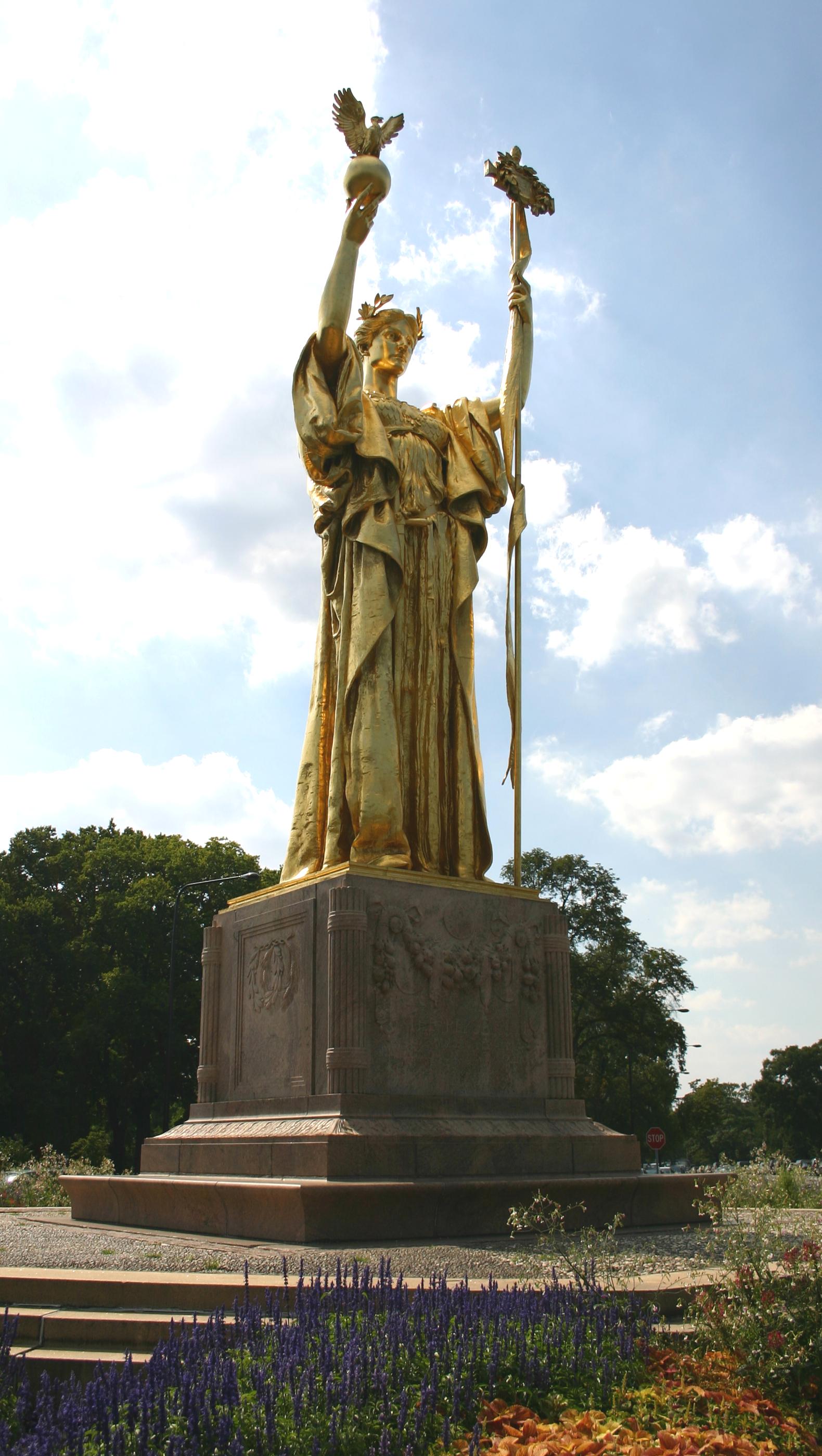
In some ways, "Cloud Gate" is a tremendously democratic work of art: unlike the statues of civil war generals and other Worthy Notables that dot the city, it doesn't revere a particular hero of war or politics or culture, placing him above the crowd: it quite literally reflects the people around it. And unlike the pedestal-mounted figures in Grant Park to the south, it doesn't tower over the people: it invites them closer, and even lets them crawl around underneath it. There's no "hands-off" quality to the big bean. It succeeds where what I take to be a totally misguided attempt at democratic art — Jackson Park's "Statue of the Republic," — fails, because it doesn't rely on a classical iconography that many of the visitors to the city's parks can't decode. What you see (yourself, your crowd, your city, bent into funhouse distortions or stretched out in a curving panorama greater than what one could see unaided) is what you get. And while "Cloud Gate" is modern in form, it doesn't alienate a lot of people, as do some of the great modernist works of public sculpture erected at the command of the first mayor Daley when he was out to show the world that Chicago was more than just the hog-butcher to the world. "Cloud Gate" is, in these ways, a very rare thing — a totally successful piece of democratic public art.

But here's the thing. All of the ways "Cloud Gate" is successful have to do with its consumption, with how visitors see it and interact with it and otherwise take it in. At the other end of the circuit, in the realm of production, it is very much a dictatorial/servile piece of art. Consider how John Ruskin describes the difference between the classical Greek mode of building, and the medieval or gothic way. The medieval craftsman was able to improvise, to add his individual form of expression to the edifice on which he worked. This may have come at the expense of the overall design, and it may have shown his own limitations — the craftsmanship of the whole production, made by many hands, would be uneven. In contrast, the classical Greek aesthetic subordinated the individual craftsman to the head planner, whose vision and expression dominated all others. "The Greek master-workman was far advanced in knowledge and power above the Assyrian or Egyptian," says Ruskin, "Neither he nor those for whom he worked could endure the appearance of imperfection in anything; and, therefore, what ornament he appointed to be done by those beneath him was composed of mere geometrical forms,—balls, ridges, and perfectly symmetrical foliage,—which could be executed with absolute precision by line and rule, and were as perfect in their way, when completed, as his own figure sculpture." Perfect, high-gloss stuff, but the cost? Almost everyone who worked on the piece worked to a strict rule, unsung, without opportunity for individual expression, and servile to dictatorial commands from on high.

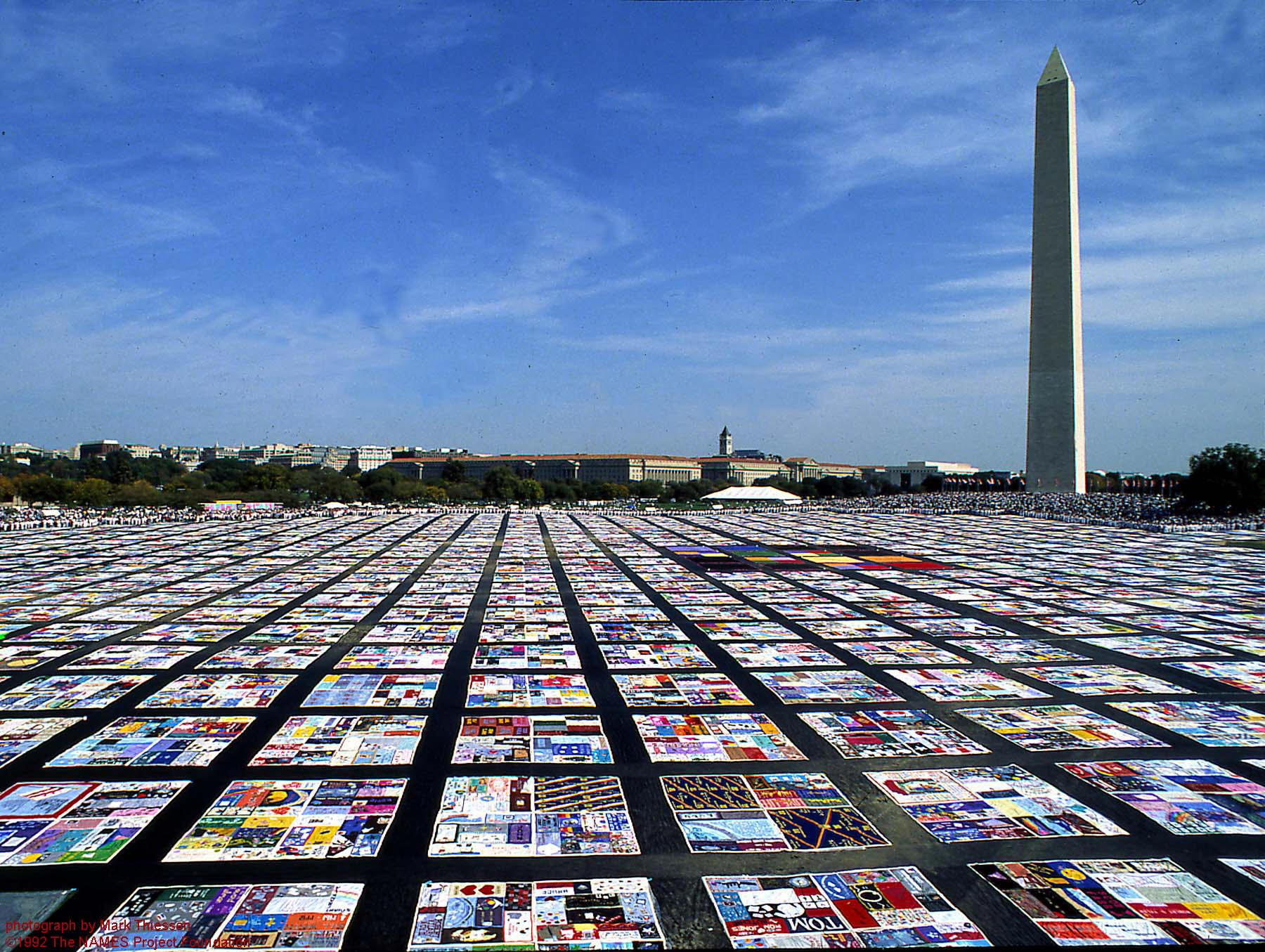
The way "Cloud Gate" was made is very much in this Greek mode that Ruskin describes. The thing is a miracle of engineering, but no engineer's name is credited — it is an "Anish Kapoor" artwork. And the people who actually built the thing didn't get to make any individualized contribution to the way it appeared. Given the technical requirements, I don't even think this would have been particularly feasible, and I'm not at all sure it wouldn't have reduced the aesthetic impact of the thing, and its appeal to audiences. (There are contemporary public art works built on Ruskin's gothic lines — the Names Project AIDS Memorial Quilt comes to mind, for example). But what I'm getting at is this: "Cloud Gate" was made in a hierarchical way, with a controlling intelligence at the top and subordinate, servile, intelligences carrying out the actual production.

So the work is democratic in the realm of consumption: bright, appealing, fun, and approachable. But at the same time it is servile in production, with an uncredited army of workers carrying out tasks that don't allow for their own individual expression. And this is how it becomes a representative work for our times. Late capitalism, after all, promises us all kinds of freedoms as consumers, and courts our favor in the realm of consumption, seeking ingeniously and tirelessly to give us what we want. But in the realm of production ours is an overwhelmingly hierarchical system, with freedom of action reserved for those in positions of authority, and real constraints put on the creative expression of those lower down in the order of things. I mean, take a look at what you're wearing — unless it's a Savile Row tailor-made suit, and if you read this blog, it isn't — it was made by the skilled hands and hard work of someone who had no input on how it looks, or how it is stitched together. From sweatshops to cubicles, the story of production is often much the same.

"Cloud Gate," then, is a mirror not just of the skyline of Chicago, but of the whole economy that skyline represents.


***

UPDATE May 26: Yesterday, as I slumped into the low-slung marshmallow that passes for a sofa in my colleague Dave Park's office, Park told me he'd read this post. "Yeah. He said, his eyes still fixed on a huge pile of papers (his research -- interviews with the people who staff the seemingly-doomed Vocalo public media project), "it was a good post. But the thing is, you know, that that democratic/servile thing is true of most pop culture." He's probably sort of right: if you think about how Britney Spears concerts have been produced, you see it right away: legions of the unsung carry out commands, have little or no creative input, and the adulation and credit don't go to them. I suppose what's interesting about Kapoor in this context is that he's part of a newish thing in high culture: the artist as a CEO of sorts. People like Kapoor or, say, Jeff Koons (should I say "the odious troll Jeff Koons"? Yes. Yes I should) don't follow the old paradigm of the artist as A. a big name but also B. a maker, a craftsman. There have been other times when this idea was at work: a lot of Renaissance paintings were made with unnamed apprentices doing the grunt work to the master's specs. But what's notable now is the industrial model of production taking root in the artworld. Those Renaissance apprentices did get to express themselves a bit in their handiwork, and they were expected to go on to make artworks of their own devising. The guys who burnished "Cloud Gate" are not. I'd have told that to Park, but he was busy shaking his head over the Vocalo papers, so I heaved myself off his sofa and legged it over to my office, thinking how it would be nice to have an army of anonymous assistants to carry out my whims. As it stands, I have only one.

Saturday, May 22, 2010

Savage Aesthetics: Coherence and Ethics Then and Now


I can’t decide whether it’s David Shields’ courage I admire, or that of his publisher. You know Shields, I think, at least by reputation: after writing four novels, he’s having his moment of basking in the full glow of the media, promoting his manifesto-as-collage-of-quotations, Reality Hunger. It’s a collection of quotations from all manner of sources, plus passages he’s written, with no attribution given to any of the passages except in a tiny-print section at the back, a concession to his publisher and their lawyers. Shields’ attitude to the inclusion of this section is pretty clear: he’s added dotted lines along the left-hand margin, with a little picture of scissors: he’d prefer you cut the pages out, and have the experience of reading the book without any sense of who wrote what.

For those of us who live on the tiny moon of experimental poetry, none of this is really shocking: collage and the death of the author have been the air we breathe for some time. But on the larger planet of fiction published by New York conglomerates, where the atmosphere contains some trace elements of money and fame, Shields’ book has caused some trepidation (and on the great glowing sun of pop culture, he’d find himself in real danger of lawsuits).

Anyway: I’m glad Shields’ book is out there: someone needed to make a big, visible move in the direction of intellectual freedom at a time when property rights threaten to dominate in all creative fields. While some very sharp lawyers are at work on this, too, Shields has achieved the kind of notoriety around which people might rally. He’s caught some flak for taking his stand, of course. As he puts it, “numerous bloggers appear to think I’m the anti-Christ because I don’t genuflect at the twin altars of the novel and intellectual property,” but none of this seems to bother him. I like that.

For all of Shields’ admirable audacity, though, some of the things he says still drive me up the wall. It’s not the fact that he refuses to genuflect before the altar of intellectual property that bothers me: it’s his worship of another false idol, one which I suppose we could call presentism, or perhaps (following the poet and philosopher Owen Barfield), chronological snobbery. In History in English Words, Barfield defines chronological snobbery as the belief that, intellectually, “humanity languished for countless generations in the most childish errors on all sorts of crucial subjects, until it was redeemed by some simple scientific dictum of the last century.” While Barfield was thinking about early twentieth century scientism, the kind of chronological snobbery he describes seems to be an occupational hazard for a certain generation of guys who teach postmodernism — just as the equally boneheaded idea of American exceptionalism afflicts a certain generation of literary Americanists, and just as the utterly odious, ahistorical, notion of favoring "native species" rots the souls of the less-enlightened breed of eco-critics. (Am I going overboard? I am, I am. Forgive me, and think of all the lunches with colleagues during which, outnumbered and tongue-tied, I’ve sputtered in graceless frustration over my enchiladas).

Anyway. Consider what Shields says in the recent essay "Long Live the Anti-Novel, Built from Scraps":

We live in a post-narrative, post-novel world. Plots are for dead people. Novelly novels exist, of course, and whenever I’m on a plane, it’s all I see everyone reading, but they function for us as nostalgia: when we read traditional novels, we get to pretend that life is still coherent.


Oooh. Argh. I mean, here’s a guy who thinks that life (and the art that represented it) were simple, coherent things, until our own time, when a great postmodern enlightenment broke like long-awaited sunlight over the stricken land. Bliss was it in that dawn to be alive, and to be literary was sheer heaven. Now, in our enlightened age, even the casual airborne novel reader thumbing this week’s James Patterson title knows in his deconstructed soul that coherence of life and form are quaint things to be appreciated with nostalgia for the time when they were all that the simple groundlings knew, and all they needed. “Art, like science, progresses,” says Shields, leaving no doubt that he feels we’ve moved on from a naïve sense of coherent life and art and into something better, and more knowing. Listen carefully, and from far beneath Shields’ airplane a spinning noise can be heard from Owen Barfield’s grave.

It’s not that Shields is ignorant of literary history. When he writes about the freedom of authors to quote with or without attribution, and to creatively incorporate the work of other writers into their own creations, he appeals to a long tradition. As he says near the end of Reality Hunger, he’s “writing to regain a freedom that writers from Montaigne to Burroughs took for granted.” But this sense of history is excruciatingly limited: Shields certainly seems to take for granted the notion that the past was a time when aesthetics were guided by a sense of coherence.

Of course there have been moments when the idea of coherence has been a predominant aesthetic principle. In antiquity, Horace’s idea of decorum was all about the fitting of parts to a whole; in the neoclassical theory of, say, Alexander Pope, coherence was one of the guiding principles of art, and his “regularized” edition of Shakespeare attempts to save the bard from roughness and irregularity. Coleridge’s notion of organic form is a very sophisticated attempt to reconcile the variety of art to a notion of coherence, and Coleridgean ideas entered the American academy under the New Critics. But this is only one side of the story. There’s a long tradition of art full of incoherencies and dissonances, and an accompanying set of aesthetic theories justifying and explaining such art.

Consider the greatest and most popular of nineteenth century English aesthetic theorists, John Ruskin. He despised what he saw as the oppressive regularity, coherence, and formal perfection of classicism and, in his famous ragbag of an opus The Stones of Venice held up against it his own version of gothic aesthetics. In one of the most famous passages of that work, he defines the qualities of mind and form that constitute the gothic in contrast to the classical Greek:

Formal Qualities of the Gothic
1. Savageness
2. Changefulness
3. Naturalism
4. Grotesqueness
5. Rigidity
6. Redundance

Gothic Qualities of Mind
1. Savageness or Rudeness
2. Love of Change
3. Love of Nature
4. Disturbed Imagination
5. Obstinacy
6. Generosity


There’s a lot to work with here, but since what we’re concerned with at the moment is the idea that incoherence as an aesthetic principle is not just a quality of our own times, let’s look at what Ruskin says about savageness as an aesthetic principle, and its relation to ornament. After going on for a while about the northern origins of the gothic, Ruskin moves on to an appreciation of the gothic relation of whole to part in a work of art (here he’s talking architectural as art):

If, however, the savageness of Gothic architecture, merely as an expression of its origin among Northern nations, may be considered, in some sort, a noble character, it possesses a higher nobility still, when considered as an index, not of climate, but of religious principle.

In the 13th and 14th paragraphs of Chapter XXL of the first volume of this work, it was noticed that the systems of architectural ornament, properly so called, might be divided into three:—1. Servile ornament, in which the execution or power of the inferior workman is entirely subjected to the intellect of the higher;—2. Constitutional ornament, in which the executive inferior power is, to a certain point, emancipated and independent, having a will of its own, yet confessing its inferiority and rendering obedience to higher powers;—and 3. Revolutionary ornament, in which no executive inferiority is admitted at all. I must here explain the nature of these divisions at somewhat greater length.

Of Servile ornament, the principal schools are the Greek, Ninevite, and Egyptian; but their servility is of different kinds. The Greek master-workman was far advanced in knowledge and power above the Assyrian or Egyptian. Neither he nor those for whom he worked could endure the appearance of imperfection in anything; and, therefore, what ornament he appointed to be done by those beneath him was composed of mere geometrical forms,—balls, ridges, and perfectly symmetrical foliage,—which could be executed with absolute precision by line and rule, and were as perfect in their way, when completed, as his own figure sculpture. The Assyrian and Egyptian, on the contrary, less cognizant of accurate form in anything, were content to allow their figure sculpture to be executed by inferior workmen, but lowered the method of its treatment to a standard which every workman could reach, and then trained him by discipline so rigid, that there was no chance of his falling beneath the standard appointed. The Greek gave to the lower workman no subject which he could not perfectly execute. The Assyrian gave him subjects which he could only execute imperfectly, but fixed a legal standard for his imperfection. The workman was, in both systems, a slave.

But in the mediæval, or especially Christian, system of ornament, this slavery is done away with altogether; Christianity having recognized, in small things as well as great, the individual value of every soul. But it not only recognizes its value; it confesses its imperfection, in only bestowing dignity upon the acknowledgment of unworthiness. That admission of lost power and fallen nature, which the Greek or Ninevite felt to be intensely painful, and, as far as might be, altogether refused, the Christian makes daily and hourly contemplating the fact of it without fear, as tending, in the end, to God's greater glory. Therefore, to every spirit which Christianity summons to her service, her exhortation is: Do what you can, and confess frankly what you are unable to do; neither let your effort be shortened for fear of failure, nor your confession silenced for fear of shame. And it is, perhaps, the principal admirableness of the Gothic schools of architecture, that they thus receive the results of the labour of inferior minds; and out of fragments full of imperfection, and betraying that imperfection in every touch, indulgently raise up a stately and unaccusable whole.


Servile ornament is the realm of coherence, but the gothic is the realm of revolutionary ornament, the triumph of part over whole, an aesthetic that allows for imperfection in its celebration of freedom. Was this really what mediæval gothic was like? I’m no expert, and my go-to mediævalist has skipped town for Cambridge, but anyone who’s spent much time wandering around a period cathedral will know there’s at least a strong measure of truth to Ruskin’s view of the middle ages. And his views were deeply influential in his own century — on Preraphaelistism in visual art and literature, for example, and on the Arts & Crafts movement in ceramics, woodworking, furniture design, and architecture.

I don’t mean to limit this aesthetic of incoherence to Ruskin and the gothic, either. As Daisy Fried (who hipped me to Sheilds’ essay on Facebook) pointed out, Laurence Sterne’s Tristram Shandy, for example, also courts incoherence. As does the Romantic genre of the deliberate fragment, And the tradition continued in all sorts of ways throughout the twentieth century, from Dada to, say, the atonal serial music of a guy like Karlheinz Stockhausen. Anyway: the point is that this notion that the past was a time when aesthetic coherence was always lauded is false.

So Shields is a presentist, a chronological snob, at least in the essay in question. But what’s bothersome is not just his sense that he’s on to something new when, in fact, he’s not. It’s that the version of the view he offers is, in fact, a kind of reduction of stronger versions of the view offered in the past. Consider Shields’ reasons for championing an aesthetic of incoherence and multiplicity. He turned to such an aesthetic, he says, because he found the alternatives “predictable, tired, contrived.” That is, he wanted novelty. Okay. But that’s a pretty shallow rationale, especially when compared with some of the deeper thinking on the issue from thinkers predating Shields. For Ruskin, there’s an ethical quality to an aesthetic of savage incoherence. In his view, it is the way to honor individuality, and not just that — it is the way to accept the individual in all of his imperfection. And this ethical dimension continues in whole swathes of thinking about those kinds of art that eschew coherence. Let’s come back to Stockhausen for a moment. Stockhausen said that his refusal to give his compositions clarity, wholeness, and accessible coherence by subordinating the parts to a dominant tonality was in essence a reflection of his ethical stance. To take the elements of music and “use them all with equal importance,” rather than subordinating some to others, was nothing less than “a spiritual and democratic attitude toward the world.” Stockhausen would no more subordinate musical parts to the whole than he would sacrifice individual lives to an abstract cause, or expropriate one person's labor for the benefit of another. For Stockhausen, the emancipation of musical dissonance is, at a formal level, a kind of parallel to the emancipation of the oppressed in the world. It doesn't actually free anyone, of course, but it exemplifies a way of thinking that could have ethical implications for those who appreciate it.

So: it’s not just that Shields sees novelty where, in fact, there’s a long historical tradition. It’s that his version of an aesthetic of incoherence in “Long Live the Anti-Novel, Built from Scraps” is attenuated in the ethical dimension that was so thoroughly elaborated by earlier thinkers. Shields’ version of the aesthetic of incoherence isn’t a triumphant break with an impoverished past: it’s a pale echo of an old idea. It's weak tea that thinks it is nitroglycerine.

Friday, May 14, 2010

Poetry and the Challenge to the Public Sphere


A few years ago I wrote an article that said (along with some things about Surrealism and Aestheticism) that the more extravagant claims for the political power of language poetry were a bit overblown. While I heard some nice things from the comparative literature crowd, the article was greeted, quite rightly, with a shrug of indifference from langpo quarters. It hadn’t, after all, said anything about language poetry that, say Geoff Ward or Charles Altieri hadn’t said earlier and better. I suppose I expected a similar indifference to “Public Faces in Private Places,” the article I wrote about the experimental poetry associated with Cambridge. Such expectations, though, weren’t met: I’ve heard some praise, and I’ve heard some passionate blame. But I’ve also found myself accused of saying things I didn’t say. One responder (who admitted he hadn’t read the essay) told me that what I really meant was that poets have to give up on poetry entirely if they wish to be serious about politics: “you implicitly criticize poets like those of the CS [Cambridge School]” he wrote, “for their refusal to accept that the minimal condition for realizing restructured social relations is the relinquishment of poetry.” I’ve also been told that my essay “shaded … into an exercise in bureaucratic control.” On a few occasions I’ve tried in my bungling, defensive way to point out that what I wrote was that there were a few specific claims about the political power of the poetry that I found unsupportable. One of the responses I’ve had, when I took that tack, was to be told that no one actually makes any grandiose claims.

For the most part, the claims I engage in the essay have to do with the purported power of a specific kind of experimental poetry to make an impact on the public sphere. The Cambridge History of Twentieth Century Literature, for example, claims that this kind of poetry sets out to be “capable of challenging the public sphere.” And David Shepard has said that such poems “recombine a language fragmented into technical jargons,” incorporating the vocabulary of specialized discourses into the poetry and thereby “return[ing] this knowledge to the public sphere from its sequestration in the ivory tower.” N.H. Reeve and Richard Kerridge (whose book on J.H. Prynne's poetry is generally quite admirable, even indispensable) claim that poetry this kind “collide[s] with the powerful instrumental discourses of the culture” with the effect of “smashing them into pieces.” They also claim that, in bringing together different kinds of language and placing them in contexts not normally their own, the work “break[s] out of the institutional space allotted to poetry and literature in late-capitalist culture.”

To assess these claims about how the poetry has challenged the public sphere, I suppose it would help to have some sense of what such a challenge looks like. To begin with, then, we need to remember that the public sphere is a set of conditions for communication. It is unlike the private sphere, which is the realm of the home, or any other area where the individual enjoys a high degree of autonomy, removed from institutional authority or the pressure to conform to standards set by others (a publication here might be a post-it note you put on the fridge to remind your spouse to buy more bananas). It is also unlike the sphere of public authority, which is the realm of state power and regulations (a publication here might be an internal memo of the Internal Revenue Service). In contradistinction to these places, the public sphere is the place where we meet not as members of a family, or functionaries/beneficiaries/victims of a state, but as (in Jurgen Habermas’ phrase), “private people come together as a public.” What does this mean? It means that the public sphere is where we communicate not in any special capacity as members of a household or as officials with authority, but without respect to status (the idea of the coffeehouse is a classical one in illustrating the public sphere: we come there to talk to each other, and meet on a kind of neutral ground, where the fact that you are a Deputy Minister of Finance or Chief of Police or Associate Professor of New Media Studies doesn’t mean anything, doesn’t confer on you any special status to overrule the next guy simply by virtue of your title) (the idea of a journal open to letters from readers is another classic example). The notion at work here is that, again in Habermas’ words, “the issues discussed became ‘general’ not merely in their significance, but also in their accessibility: everyone had to be able to participate.”

One common criticism of the public sphere in some of its manifestations — and often a valid one — is that it doesn’t live up to the ideal. Many people aren’t able to communicate in the allegedly public media such as newspapers, journals of opinion, radio, television, what have you (the internet’s impact of the public sphere is still being sorted out. I know a guy who’s job it is to be on top of this, and he’s perpetually frazzled by the enormity of the task). Certain opinions are shut out, and at times whole classes of people are silenced. Sometimes specialized knowledge becomes inaccessible, and this too can be a problem for the public sphere. And authority of various sorts (“I’m an expert, and you’re not”) can distort the ideal of equal participation, as can the power of money to trumpet some views over others. There are, in short, plenty of reasons to challenge the way the public sphere is organized in any particular place and time.

So challenges to the public sphere are important. But what do they look like? Well, they have to threaten to change the existing network for the public expression of ideas, opinion, and information. The first example that comes to mind is one cited by the historian J.H. Plumb, when he wrote about the organization of radical political opinion in England during the period between the American Revolution and the Napoleonic wars. He begins by discussing Edmund Burke’s anti-revolutionary writings and the exclusion of radical writing from the established channels of communication, and goes on to describe the enormous effort that went into challenging the (at this point restrictive and reactionary) public sphere:

In some ways Burke himself was largely responsible for the growth of these radical clubs. Thomas Paine, an active and violent supporter of America Independence, had replied to Burke's Reflections on the Revolution in France in his Rights of Man, in which he had proclaimed the necessity for universal sufferage and the sovereignty of the people. He denounced monarchy and aristocracy as useless archaisms. His book was immensely popular. It was welcomed by the Society of Constitutional Information, formed in 1780 by earlier radicals to further the cause of Parliamentary Reform; and in 1792 almost every town in England and Scotland had a club for Constitutional Information or its Society of Friends of the People. Most of their members were drawn from the working or lower middle classes, with a sprinkling of educated, professional men. The general aims of these societies seem to have been twofold: to spread Paine's ideas by reading his works, and to impress the government with the strength of public opinion favorable to France. At the same time they kept up an adulatory correspondence with the National Assembly in France and with various Jacobin clubs. This movement was given a clear organization by the formation of the London Corresponding Society, which, under the energetic leadership of Thomas Hardy [no, not that Thomas Hardy — (Archambeau)], a working man, acted as leader for the provincial societies. Two general Conventions were held at Edinburgh and at the second, in 1793, the British Convention of Delegates of the People, a number of emergency resolutions were passed which provided for secret leadership and meetings in case the government took repressive action. A revolutionary organization was in the making and the government took steps to thwart it.


So that’s what it takes to challenge the public sphere — you make possible new channels of communication for a broad public; you make public, and not just to a handful of people, ideas and information not otherwise available; and most importantly you include otherwise silenced classes of people in public discussion. Many people’s life-works went into the effort described by Plumb, but it was a real challenge to the existing public sphere at the time. The proof that it was a real challenge, of course, is that it incurred real repression. We’re not talking about snide dismissiveness, we’re talking about state power, violence, prison, and the like. I mean, in one sense a challenge is easy to make. I can say “I challenge Mike Tyson to a fight” right here. But a real challenge is one that is heard as a challenge, and met as a challenge (and Mike Tyson’s not reading this blog. Even if he did, he wouldn’t experience my “challenge” as a challenge). A challenge to the public sphere is, to quote an American politician of no small repute, “a big fucking deal,” and it doesn’t come about that often.

As for the claim that the British experimental poetry associated with Cambridge has “challenged the public sphere” — well, I’m not convinced it has, not if what we mean by the public sphere is anything like what Habermas meant. Which is not to say anything more than that. To say this doesn’t imply that poets should give up on poetry as the minimum condition for being political (Tom Paine, the heroic challenger of the public sphere Plumb cites, wrote poetry — some people still read his poem “Liberty Tree”). Nor does pointing out the over-grand nature of these particular claims imply that poetry should submit to bureaucratic control (I'm not even sure what that would look like). Nor does it mean that there’s no politics to poetry. But it does mean that the effects of British experimental poetry on the public sphere have, in these particular instances, been overstated. The public sphere in Britain continues much as it would have otherwise, and I don’t think it is aware of any threat from the vicinity of, say, J.H. Prynne. (Note that Prynne hasn’t made any claim to such transforming power, just some of his more zealous advocates, as quoted above).

I should say that I do think that the way much of this poetry has been distributed and read has often occurred at an interesting angle to the public sphere. For decades, Prynne and those associated with him often published in the kind of micro-press world that’s familiar to many poets: self-publishing, free distribution to a small network of those who are interested, tiny journals, etc. This seems to me less like a challenge to the public sphere than a withdrawal from it into something that sits somewhere between the private sphere of family and friends and the public sphere. But an alternative — a good thing in itself — isn’t the same thing as a challenge. (It is also, I might add, exactly “the institutional space allotted to poetry and literature in late-capitalist culture,” not a breaking out of that space, as Kerridge and Reeve maintain).

Anyway, what struck me, and what gave my essay its title, was the strong public-spiritedness of the poetry, combined with the non-public-sphere methods of distribution it had for many years. It called to mind Auden’s phrase about “public faces in private places” being “wiser and nicer than private faces in public places.” I don’t think of this as hypocrisy, or in any way negative. I did, and do, think it is different from a returning of knowledge to the public sphere, or a challenge to the public sphere. If you think that's an obvious point, so do I.

*****

In unrelated news, Marcela Sulak (whose new book, Immigrant is out), recently arrived in Tel Aviv from Washington, D.C. and points west, and has started "Writing from Israel", her new blog on poetry and other things.

Monday, May 10, 2010

Cambridge Poetry and Political Ambition


Back in the summer of 2008 I spoke at the Sorbonne about the poetry associated with Cambridge and J.H. Prynne, and tried to understand what I took to be some of the more grandiose political claims made on behalf of the poetry (that it "smashes the discourses of power" and the like). The Cambridge Literary Review published a longer version of the Sorbonne talk in their inaugural issue, and that essay's just been published in the U.S. in Emily Taylor Merriman and Adrian Grafe's new book Intimate Exposure: Essays on the Public-Private Divide in British Poetry Since 1950.

The essay kicked up a bit of a stir when it appeared in England. At first I wasn't sure why, since I didn't think it attacked the poetry, just some of the less supportable, more Utopian claims for what poetry could accomplish. But as the scuffle went on and on, I got a better look than I'd had at the conditions that seem to have made so many of the poets associated with Cambridge a bit prone to defensiveness. They really do seem to face a climate of hostility in the larger poetic community, a hostility greater by orders of magnitude than that faced by their American counterparts in experimental poetry.

Since the good people at the Cambridge Literary Review have made the letters section for the second issue available online as a PDF file, I thought I'd take the liberty of posting Andrea Brady's response to what I wrote, and my own fumbling response to her. For the record, I think Andrea Brady makes some very level-headed and sound comments, and knows more about these things than I do. But I don't think I made an equation between "publication in the larger academic and commercial presses and the authenticity of a poetry’s claims to political efficacy." If I did make that equation, I was wrong: I don't think any poetry in England or America, at the moment, has a political impact of any major scale (for reasons larger than any particular poet's efforts — I try to analyze why this is the case in a big article called "The Discursive Situation of Poetry" that will be coming out in an as-yet-untitled book edited by Mary Biddinger next year) (I expect a bunch of people will be angry at that article, since one of its premises is that we can't just will ourselves to be agents of political efficacy, that larger objective conditions have to be right, and that those conditions determine both our consciousness and our field of impact) (but I digress).

Anyway: this isn't to say that poetry can't aim at politics, express political viewpoints, or have the kind of small-scale impact that many other kinds of actions (teaching a history class, writing an article on sociology, attending a rally, talking to your friends, ranting in your blog) can have. I mean, I don't think Andrew Motion changes the political climate appreciably more than does John Wilkinson. Of course poetry helps in its tiny way to change consciousness, just like many other things do. But British Petroleum does what it does with equal disregard for iambs and disjunctions. I think Andrea and I agree, more or less, about this.

The other thing I'd add at this point is a bit of a rejoinder — not so much to Andrea individually as to a bunch of us, including me, in the critico/academic/alt-poetry multiverse. Many of us have at one time or another turned to the idea of poetry, and the teaching of poetry, as acts of political resistance. The rejoinder to this notion of resistance-politics comes in a comment Alain Badieu once made about Gilles Deleuze. For Deleuze, says Badieu, "nothing was interesting unless it was affirmative. Critique, ends, modesties... none of that is as valuable as a single affirmation."

****


Dear Cambridge Literary Review,

I was gladdened to read Robert Archambeau’s essay in Cambridge Literary Review issue 1. It is an intelligent and serious engagement with the poetries erratically gathered under the name “Cambridge School,” and with their most significant and problematic contention: that they are committed poetries, with political aspirations beyond the simple plundering of domesticated interiority for its symbolic potential. It is also offers, in spite of itself, a kind of reassurance that there are indeed readers for this poetry, readers gathered far from Greenwich Meantime, on the shores of Lake Forest Illinois, into the nanosphere of the British micropresses.

I am certainly aware of the problems with that contention. The poetries are too, and deal with those problems in very different ways. I want to hold onto the distinctions among their strategies and qualities, to the point of questioning the validity of the term “Cambridge School.” But I also know that protesting about the designators is something of a cliché when it comes time to respond to synoptic pieces like Archambeau’s, and that in introducing a large, various and sometimes grotesquely self- aware body of works to new readers it is helpful to be able to assert some continuities or shared aspirations, just so we have a starting line. So I’m not going to go into the particularities of what I view as the most important differences between the poetries of Prynne, Sutherland, Wilkinson, Jarvis, Riley and myself—to say nothing about the countless others who we could associate with “the CS”; I’ll simply say that the term remains a pretty coniferous lump for me to swallow. Personally, I feel like I’m forever being tagged “Cambridge School,” even though I’ve lived in London for twice as long as I was a gownie, and my time in the UK still adds up to far less than half my life. When I did live in Cambridge I felt distinctly female and distinctly American. I’ve always said that I was influenced less by Prynne than by Frank O’Hara; my commitment to a politicized art predates any serious reading of Prynne, and even now I have profound misgivings about the political methods of Prynne’s late poetry. During my five years as a student and one as a worker in Cambridge, I was seriously afflicted by the gentility and ancientness and patriarchy of the place. I guess it was no accident that I ended up writing a chapter of my doctoral thesis on the way that seventeenth-century literary coteries preserved the authority of patriarchal poets through agonistic self-definition and fantasies of all-male reproduction. I didn’t see the resemblance at the time.

So now I find myself teaching early modern literature at Queen Mary University of London, and this week we were working on exactly one of those patriarchs, rare old Ben Jonson. We were thinking about the stigma of print, and how Jonson reviled coterie literary styles and sought to dignify professional authorship through the publication of his ridicu- lously monumental 1616 Works. We discussed his first epigram, ‘To the Reader’, with its behest “To read it well—that is, to understand.” We recognised that this plea for understanders, for readers who shared social, political, ethical and literary values, was an attempt to replicate in print the conditions of manuscript circulation—exclusivity, similitude, privilege—but that Jonson was trying to use his poetry’s moral and aesthetic authority to create his readers while still prospering from commercial circulation.

Sorry for the history lesson. I suppose you can see where I’m going with this. It suddenly seemed like a familiar predicament: the construction of print as a democratic and politically progressive medium, but one which many authors experienced as subject to internal and external censorship, stylistic constraints and the pressure to dumb-down; the struggle to maintain private values and still recruit a public audience; disdain for readers who had failed to prove their qualifications (as anyone who disagreed with or disliked the poetry did fail, by definition); the need to trade the exclusivity of manuscript for the public authority to be garnered from print. Many of these characteristics are attributed to “private” and “public” forms of circulation in Archambeau’s essay. While his terms are open to question—not least because the limited circulation for all poetry, distributed by micro- or macro-press, by internet or letterpress, is so incredibly small—the comparison with early modern publication systems might help open the discussion up a bit further.

Scholarship on that period understands manuscript to be a form of publication, with political and social influence and efficacy. Like even the most “prominent” (Archambeau’s term) of contemporary poetry books, early modern printed editions usually ran to less than a thousand copies; so it is inaccurate to claim that print quaprint was especially effective in inducing political change. But most importantly, the networks of readers established by what Archambeau might decry as circulation in “private comforting confinement” did more than challenge early modern politics: these networks completely transfigured European thought and society, and were the engineers of the Renaissance.

Obviously, there’s been a lot of water under the Bridge of Sighs since then. These coteries were for the most part privileged elites in stratified societies—much as we academics are now—but they were a lot closer to the seats of power than we are. I’m not saying that Prynne is our Erasmus. But I wanted to use this example as a way of outthinking the rather crude equation between publication in the “larger academic and commercial presses” and the authenticity of a poetry’s claims to political efficacy. Certainly I see a problem with any poetry’s (“messianic”) claim to change the world, to flatten instrumental reason with the hammer of détournement. But it was telling that Archambeau found that claim (also, to an “incidental political potency”) in critical essays by John Wilkinson – or, more importantly, in a controversy he was having with Peter Riley. It would be much harder to find it in any of the poems, which are more likely to be awash with self-criticism for their impotence than boasts about smashing the state. I’m perfectly aware that my poetry isn’t going to change the world because it is “far from a mass movement,” as I wrote somewhere: it’s not part of the class struggle, energized by direct action or likely to inspire it. I can carry on writing it if I think it will be available to future readers as a record of a peculiar dissidence. At times that in itself has seemed like a major accomplishment. At my most optimistic, I hope it encourages its readers—who, as readers seeking out this kind of work, aren’t likely to require encouragement—to think critically about politics, or perhaps to be inspired by such thinking to participate in collective efforts to overcome the tyrannies of capitalism. As a reader myself, I’ve been inspired by poetry to do what else I have done; and I would include, among my political acts, teaching, conversation, and collaboration. I think I share with other Cambridge types the belief that engaging with 300 or more students every week in debates about literature, politics, rights and forms and language, is a political and ethical activity. When I teach difficult late modernist poetry (including the most recent poetry written by my peers) alongside the tweedy canon, I hope I am not being a hopelessly narcissistic self-advertising git. I consider it my pedagogical duty to those students, to examine with them the full range of alternatives to the regal discourses of jargon and bathos and greed. They can take what they want. I say this not because Archambeau has thrown the typical stink-bomb at the politicized poets who are also ghosts in the universities’ ivory machine, but because lecturers, who spend their working hours immersed in critique and negativity, can be a very masochistic bunch when it comes to describing the politics of their work. I think it’s worth proclaiming publicly that that work is a kind of activism, which promotes creative, intelligent, belligerent… well, yes, resistance.

That’s Prynne’s word for it, of course. I hope that as the large and various body of work which has had some connection to Cambridge in recent years is read and matures, Prynne will become less important as a totemic figure, the TLS anti-celebrity, and more important simply as a poet. In my view the existence of a Cambridge School should not be predicated on Prynne’s example: not on the example of his poetry, or of his attitudes to its circulation and promotion. If the Cambridge School
did exist, then it existed between the years of the publications of the English Intelligencer and A Various Art. But these days there’s a great deal of obscurity around, in Manchester, London, Newcastle, Glasgow, and Totnes; is all this poetry not “Cambridge School” unless it is branded with the mark of Prynne? If Barque is the modern home of the CS, then
that field stretches also to Paris, Berlin, China, New York and Winnetka. If it’s all about geography, would we say that Dell Olsen is now Cambridge School, because she lives in the episcopacy? Do the most recent Yankee immigrants Justin Katko and Ryan Dobran know what they’re in for?

Neither is it correct to claim based on Prynne’s example that others of that ‘school’ are perversely or morally inclined to refuse invitations. So Prynne demurred when Poetry Review came calling? Keston and I didn’t. We’ve been on the radio. Keston was the poet-in-residence for the bloody Newbury Spring Arts Festival!—as you can see on a flier headlined “Mickey Salberg’s Crystal Ballroom Dance Band to play at the Lambourn Centre.” We’re not refusing a mass audience or a university press on principle, we’re just waiting to be asked. The new generation is full of fame whores. But Archambeau’s article among others shows that there is some kind of notoriety slowly building up out there; the nasty sniping which Jeremy Noel-Tod among others has rebuffed shows that the poetry is public enough to get up the nose of Craig Raine. We can blame that on the internet. The digital age has much more powerful powers of distribution at its disposal than the early modern republic of letters—which is
another way of saying that even poetry which is micro-published by a fly-by-night outfit like Barque can get halfway around the world, thankfully, to our comrades in Illinois. The Archive of the Now, the free digital repository of recordings of contemporary poetry which I run at QMUL, has a fanbase on Facebook that extends to Japan, Finland, Brazil and Idaho. Perhaps inevitably, distinctions such as I’ve been making about collegiate membership are going to get lost in transit. The problem with shipping everything under this Cambridge School bill of lading is that a great deal of really important poetry gets lost too, because we feel we know where the poetry is happening, and from there it’s easy to assume we also know who is making it. On the other hand, maybe “Cambridge School” is a smart branding exercise: it’s contentious enough to generate lots of valuable publicity.

I don’t mean to attack Archambeau’s piece, though I recognise I’m quibbling about terms and affiliations, rather than mucking in with the analysis and detailed close reading of the poetry. That work is the most interesting and most valuable, and Archambeau’s essay is an important example of it. To defeat the expectations which come along with the name “Cambridge School,” the deeply various poetry published in the Cambridge Literary Review needs intelligent readers and critics; I’d even
go so far as to say that it is written in expectation of them. I’ve seen critics from beyond the blood-soaked Trumpington perimeter stick their heads above the parapet, only to be shouted down by the defence forces entrenched in their tiny garden plots—and so decide to stop caring. I don’t want Archambeau to stop caring. I’m grateful to him for paying attention to this work, and for contributing to the important debate about how a poetry can be actively and effectively political.

Andrea Brady
Queen Mary University of London


Robert Archambeau responds:

I’m grateful to have such a thoughtful response to my essay, and I certainly understand the wariness about the term “Cambridge Poetry,” even when it comes with a string of disclaimers attached. It was the much the same when people started talking about Language Poetry. When you write that you’re “forever being labeled ‘Cambridge School’, even though I’ve lived in London for nearly twice as long as I was a gownie,” and when you ask “would we say that Dell Olsen is now Cambridge School, because she lives in the episcopacy,” I suppose you’re objecting to the geographic nature of the term. I get it. But I suppose what’s happened is that geography has become incidental, just as publication in L=A=N=G=U=A=G=E became incidental to what was meant by Language Poetry.

I use the term because it seems to be the term that is coming into general use. One might—one should, I suppose—ask whether the term is, in the end, a good thing. I’m inclined to think that, like most words, it both reveals and conceals. Everything you say about differences between individual poets is true, and everything you say about periodization sounds right, too. I understand your idea of that the period “between the years of the publications of the English Intelligencer and A Various
Art
may constitute a distinct moment—but even making this distinction would probably bring down a rain of bile on your head if you made it loudly enough. Someone would come along and quite rightly insist on the variety of poetic activity in the Cambridge orbit at that time. Still and all, I don’t think all generalization is always bad. If any of us really thought that, we’d be left with nothing to say but proper names, if those. And I do think there are a cluster of techniques, ideas, publication and reading venues, influences, and the like that we can speak of as related phenomena. I’m interested, for now, in what the term can reveal; while you seem more concerned with what it conceals.

The other thing I take from your response is the question of the political claims made for the poetry, and the relationship between public presence and political ambition. Some of the claims really have been large. The claims I cited included one from David Shepard, who described a Prynne poem as an attempt to “recombine a language fragmented into technical jargons,” incorporating the vocabulary of specialized discourses into his poetry and thereby “return[ing] this knowledge to the public sphere from its sequestration in the ivory tower.” This would be a hell of a feat, and hugely politically important. The logistics of it, though, would require a huge effort at outreach, at actually bringing alienating kinds of language into public discourse. Shepherd either didn’t quite mean what he said, or, like a lot of us, he substituted a political wish for a political reality. Another claim I mentioned came from N.H. Reeve and Richard Kerridge. According to Reeve and Kerridge, the kind of poetry they discuss can “collide with the powerful instrumental discourses of the culture” with the effect of “smashing them into pieces.” Poetry can certainly depict such a smashing. But the gulf between depiction and actuality gets glossed over here. The instruments of power continue on their way, despite the poets’ interventions. John Wilkinson makes some big claims, too. He says that you and Keston Sutherland are writing at “a point of historical convergence” where your poetry might exercise “political potency.” Either Wilkinson’s sense of what political potency looks like is very different from mine, or he’s making claims that are quite unlikely to be supported by events. I’m actually much more inclined to agree with your own sense of the political reach of poetry (or at least the political reach of poetry at this point, and in the first world), when you write that you “see a problem with any poetry’s (‘messianic’) claim to change the world, to smash instrumental reason to bits with the hammer of détournement.” This isn’t the sort of claim I was taking issue with in the article.

All of this brings to mind some comments made by Reginald Shepherd, a fine poet and critic who died last year. As a gay black man from the Bronx, he knew a thing or two about the need for political change. Here’s something he wrote about politics and poetry:

Those who wish to change society might better turn their energies toward society itself, to the real areas of oppression and suffering, economic, political, racial, and sexual. […] To blame literature, or culture as a whole, for social, economic, and political woes (or even to see it as central to their perpetuation) is evasive at best, dishonest at worst, a kind of posing as politics. […] George Oppen gave up writing poetry for several years in favor of political activism, because he believed neither that poetry could change society nor that it should be subordinated to an agenda. In Oppen’s words, “If you decide to do something politically, you do something with political efficacy. And if you write poetry, you write poetry, not something you hope, or deceive yourself into believing, can save people who are suffering.” Several years ago, I was asked by someone I had just met whether my poetry was Afrocentric. I told him that I didn’t know what he meant by that term, and he said, “You know, dedicated to the liberation of black people everywhere.” My only answer was, “I don’t think that poems can do that.”


I found that convincing when he wrote it. I find it convincing now.

Robert Archambeau
Lake Forest College